
We have owned five different refrigerators in RVs: two were Norcold refrigerators and three were residential refrigerators. I personally would take the residential fridge over the gas/electric Norcold refrigerator any day. However, in certain size RVs, it just makes more sense for the RV manufacturers to put in the absorption-type units.
Norcold Refrigerator Safety
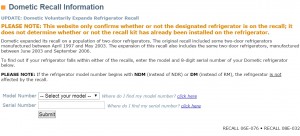
Certainly, if you have either a Norcold or Dometic refrigerator, you should be sure your unit is not on recall. You can go to Norcold or Dometic’s website to verify that you are not on the recall list.
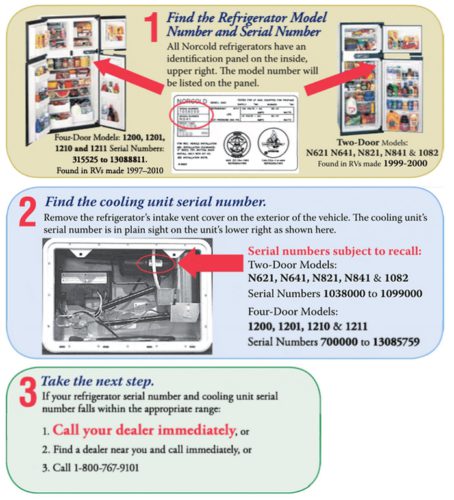
Armed with your model, fridge serial number, and cooling unit serial number you can verify that your unit is okay. You may also have to look for the upgrade kit that may have already been installed in your RV fridge if you have an older unit. This is Norcold’s process:
This is what you need to do for a Dometic Unit:
Avoiding Trouble
One of the best ways to avoid trouble with your Dometic or Norcold refrigerator is to be sure when you are using the fridge on either gas or electric; the unit is level! I have heard RVers say I use my fridge all the time, and the unit is not always level, and I have never had a problem.
That may be true, but the damage that can happen occurs over time. Each occurrence when the boiler overheats due to a non-level condition reduces the fridges efficiency not allowing it to cool the way it was supposed to. Our previous Norcold refrigerator could barely keep fifty-five degrees when it was in the nineties outside.
That was in our previous 5th wheel RV before we put hydraulic levelers on it. You see, even being off three degrees from level can create issues for your absorption fridges boiler assembly / cooling unit. The best way to avoid this situation is to not run the fridge when you are in unlevel conditions: driving up and down unlevel highways and back roads and parking in unlevel areas. That way you will avoid damaging your fridges cooling unit.
If you feel your RV is not level, this is a good time to be sure your Dometic or Norcold refrigerator is not turned on. Your fridge can stay cold for hours without power. We can travel eight hours and the fridge will only drop a few degrees if we don’t open the doors.
And by the way, you should never travel with your propane system energized. It clearly states this on the safety placards in your RV, especially motorized RV’s! Early on in our RVing lives we were not told this fact. “Sure, you can run the fridge while traveling! Don’t turn that propane off, just leave it on and you’ll be fine!”
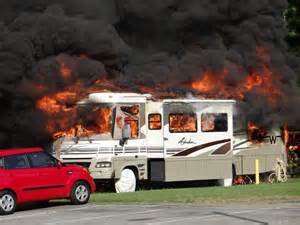
That’s what the RV rental companies told us, so we did. A few years later, we almost lost our RV to a propane fire. If not for dumb luck, we decided to stop and look in our fifth-wheel RV, and we found a fire brewing. But this is what can happen!
Avoiding a Fire!
When trouble occurs in the RV refrigerator cycle, the heat that normally drives the refrigeration cycle can become destructive. If conditions have been allowed to occur, like operating in an unlevel condition over extended periods of time, trouble could be lurking. When this heat is not controlled, fire will occur!
Even Dometic and Norcolds recalls have not stopped their refrigerators from burning an RV to the ground. The temperatures they are trying to control run around 355 to 400 degrees. Those are the temperatures involved in these absorption fridges!
Norcold Refrigerator Solutions
The best way to avoid a fire is to control what happens in the refrigerator’s Cooling unit.
Mac the Fire Guy is a proponent of installing a fire suppression system in the cooling unit area of the fridge. It is a unit that releases a foam in the exterior fridge area that puts out a fire when the temperature in that area reaches a preset level. I believe the best way to prevent an RV fridge fire is to automatically shut down the unit when the temperature reaches unsafe levels.
The addition of a twelve-volt fan in the outside fridge compartment can allow air to move more freely over the cooling unit and drastically improve its efficiency. Camco makes a fridge roof vent kit that uses a fan and solar power and replaces the existing roof vent.
I will share another method I believe will also work well in a future blog. So, stay tuned, and as always, feel free to comment if you wish!








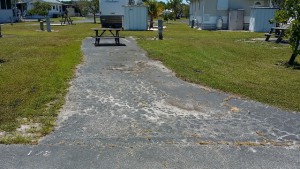
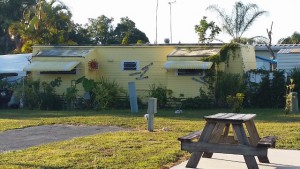
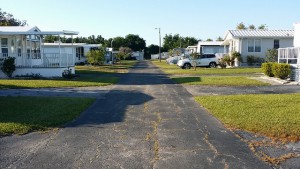
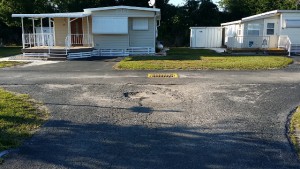
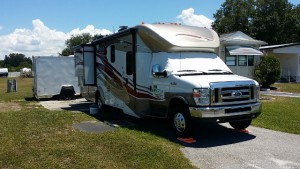
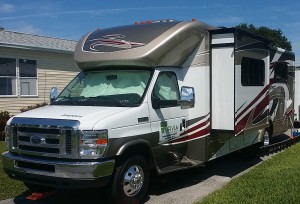

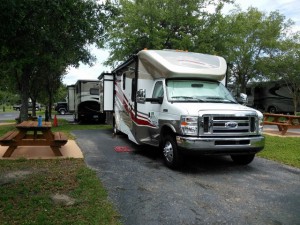
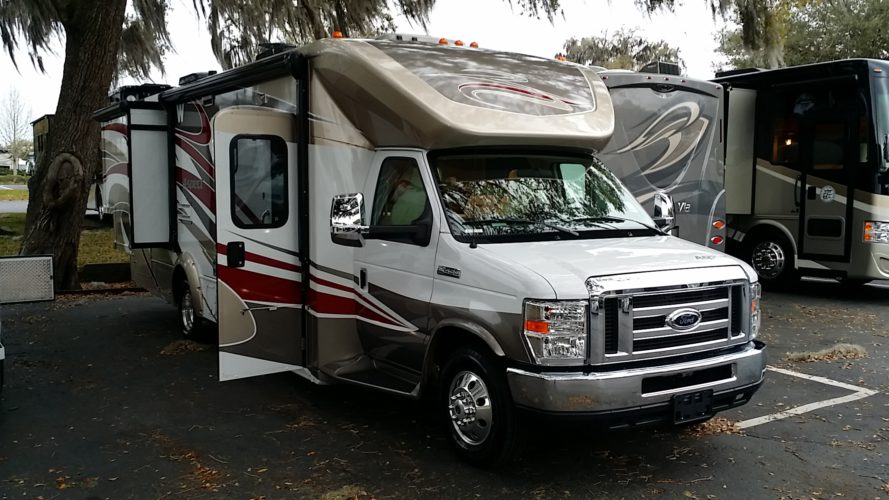
 Some that are in the twenty-four foot length have full bathrooms in the back and queen size murphy beds to handle the sleeping arrangements. They appear to be really nice tiny RV homes! I could actually see myself enjoying full time RV living in it! If one is moving their RV home a lot of the time, I can see why these RV’s are the way to go!
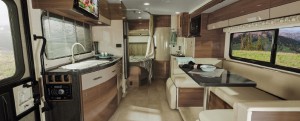 Why do I bring up this topic of tiny RV homes?
 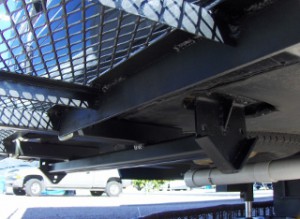 So, my RV tech friend added some extra welds to the existing skid plates that attached to the main frame rails of the RV. He welded a bar between the skid plates to allow for attachment of the receiver bars. Once he had welded those in place he was able to then build the steel platform using flat and angle stock, and the metal grid material you see here in the photos.
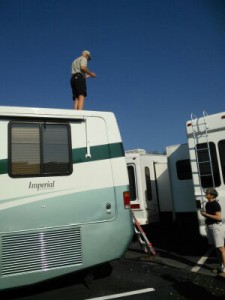
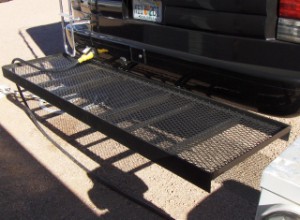 I have discovered this platform has more uses than just carrying stuff on the back. It sure makes it easier to clean the back of the RV, put the window screens on, get on the roof, and carry my generator during travel. When dry camping at rest areas or truck stops it’s easy to plug the RV into the generator sitting on the back platform as it is always set up and ready to go.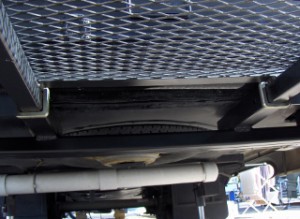




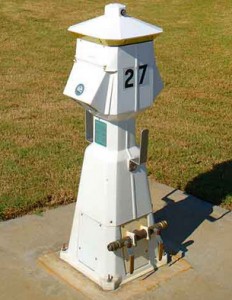 Water usage aboard your RV is something that should be monitored for both quality and pressure. As we have traveled around the country we see large differences in water quality and hardness. Also, water pressure can vary greatly in RV parks depending on if the park is on well or city water. I always check the water pressure at the faucet before hooking up. I keep a gauge in my water bay to remind me to do that. Maximum pressure on my rig is 60 psi. Some parks I have been in have been over 100 psi! That can ruin an RV’s water system pretty fast if you are not aware of that!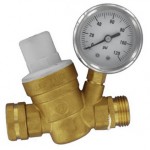





Recent Comments