
RV Boondocking on a Budget: Tips to Save Money While Living Off the Grid
RV boondocking is a wonderful way to enjoy freedom on the road while saving a lot of money. Instead of paying for expensive campgrounds, I like finding free or low-cost places to park my rig. Living off the grid means I rely on my own resources and keep things simple.
It’s similar to camping with all the comforts of home, as long as I plan right. In this article, I’m sharing what works for me to boondock comfortably without burning through cash, so you can do the same.
Understanding Boondocking and Why It Saves Money
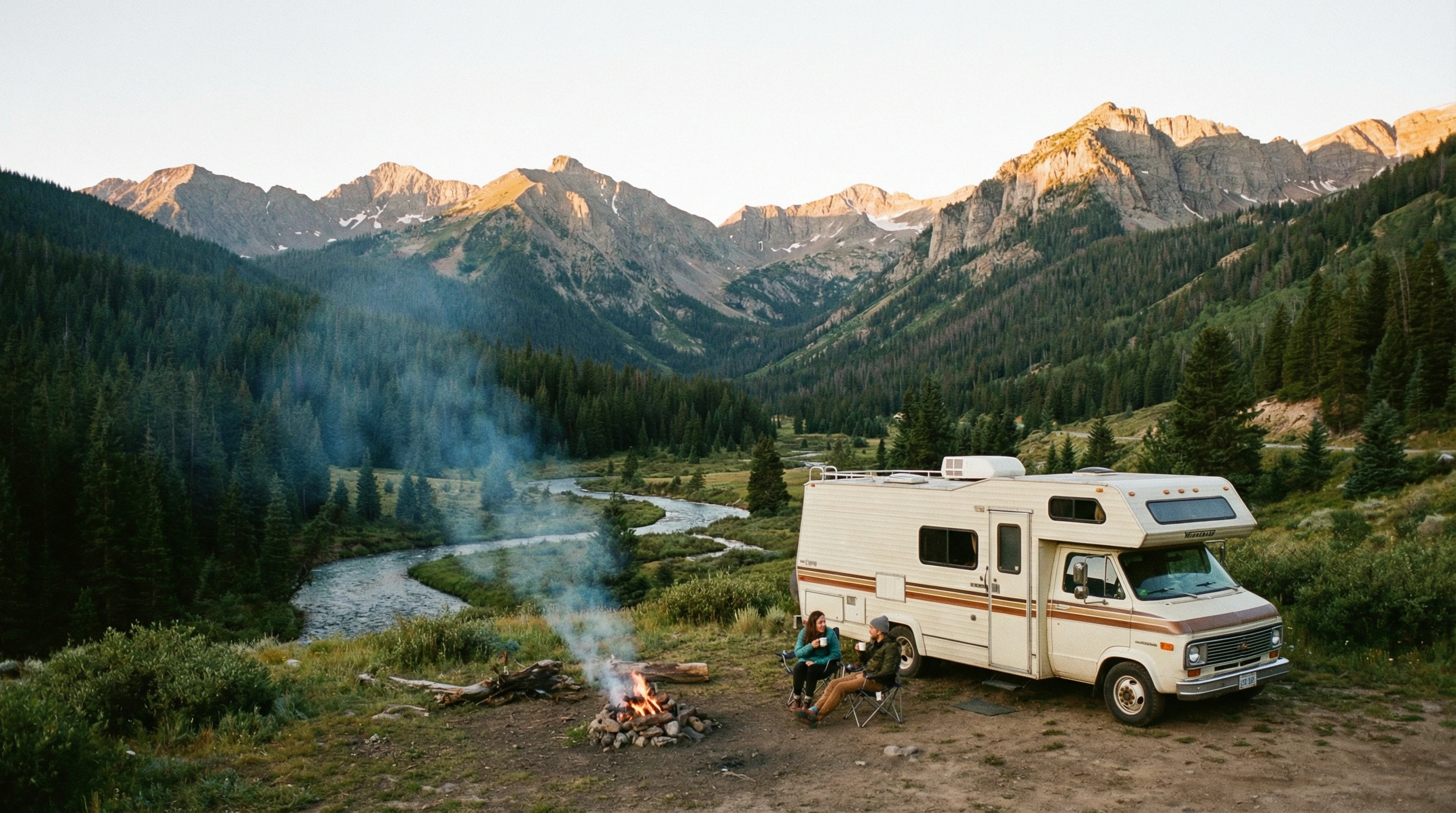
Boondocking, also called dry camping, means parking your RV without hookups to electricity, water, or sewer. I usually do this on public lands, in forests, or sometimes even in certain parking lots. Not paying campground fees is a big money saver right away. Just for context, paid RV parks can run $30 to $70 per night or more. With boondocking, my nightly stay is free.
The main idea is to make the most out of your rig’s built-in systems. This includes using the RV’s house batteries instead of plugging into shore power, conserving water, and making smart use of your generator or solar panels.
Public lands managed by the Bureau of Land Management (BLM) or National Forests in the United States, Truck Stops, and Rest Areas are top spots for folks like me who want to stretch their travel budgets. Some helpful apps and websites, like RV Parky, Campendium, and FreeRoam, make it easy to find these great places all over the country.
There’s a popular trend toward boondocking as more people try to cut down on camping costs. Boondocking also helps dodge the crowded feel of busy campgrounds. Once I got used to being self-sufficient, I found I actually liked the peace and privacy of off-grid living. While there is an upfront investment to get your rig ready, the savings add up fast and make the adventure much more affordable in the long run.
Getting Your RV Ready for Off-Grid Living
A successful boondocking trip starts with some basic upgrades and good planning. I learned it’s important to focus on energy, water, and waste management first. Even when keeping to a tight budget, these tweaks make a huge difference.
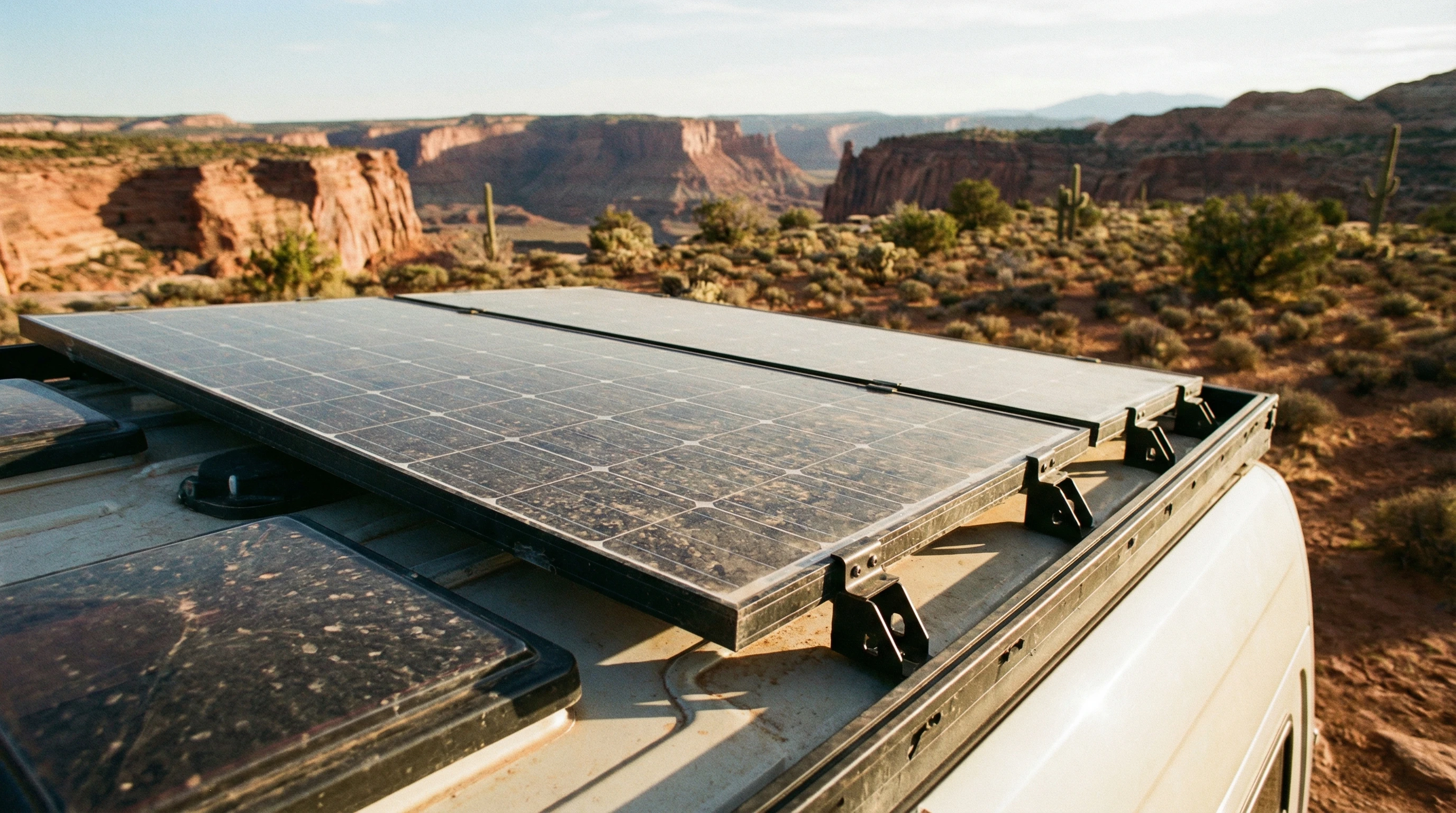
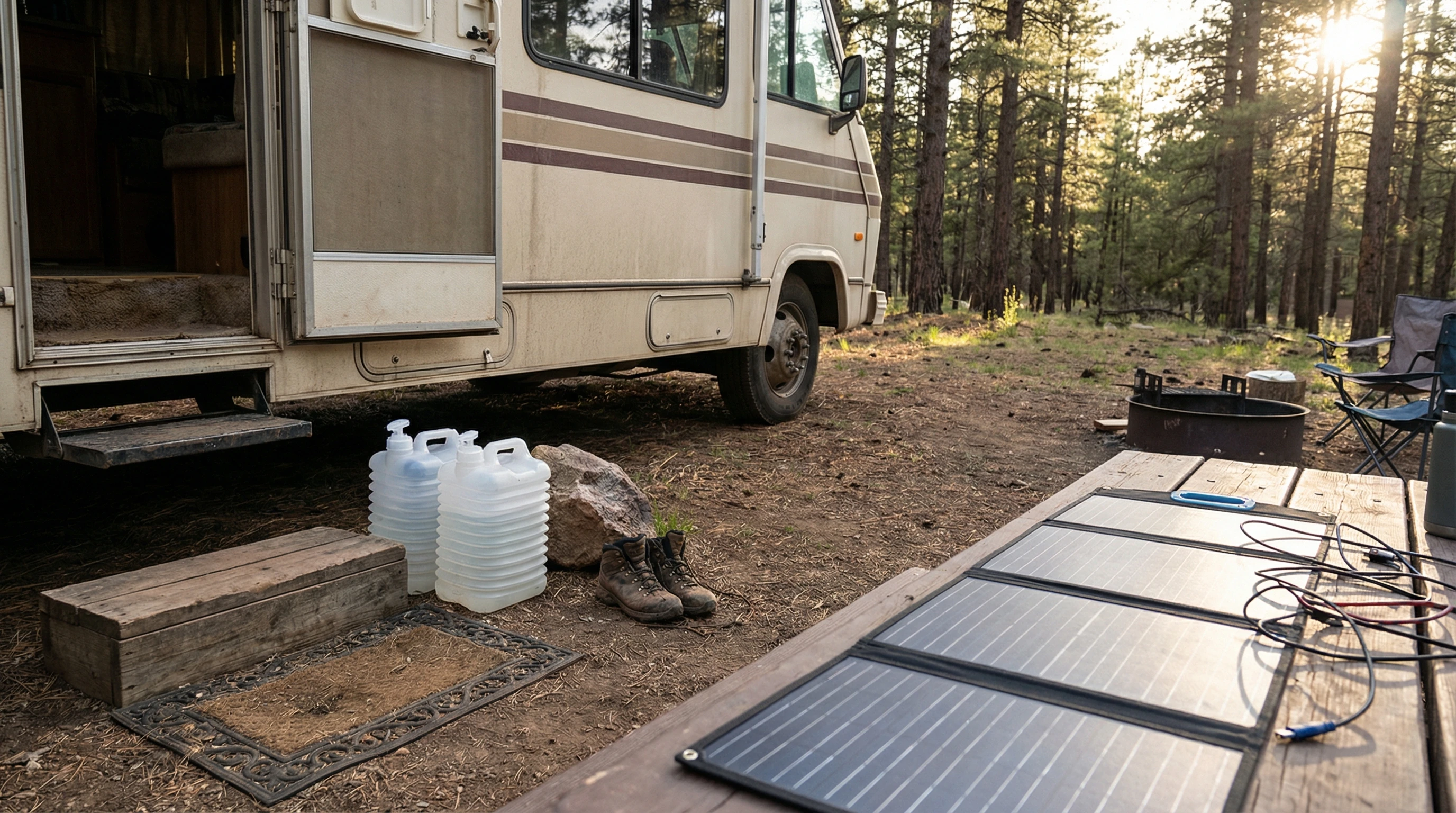
- Batteries and Power: The standard battery often doesn’t last long, so I now have two Lithium batteries. Adding a solar panel, even a portable one, makes it easier to keep lights and small devices running. If you can’t snag solar right now, at least bring along a way to recharge with your vehicle or a quiet generator.
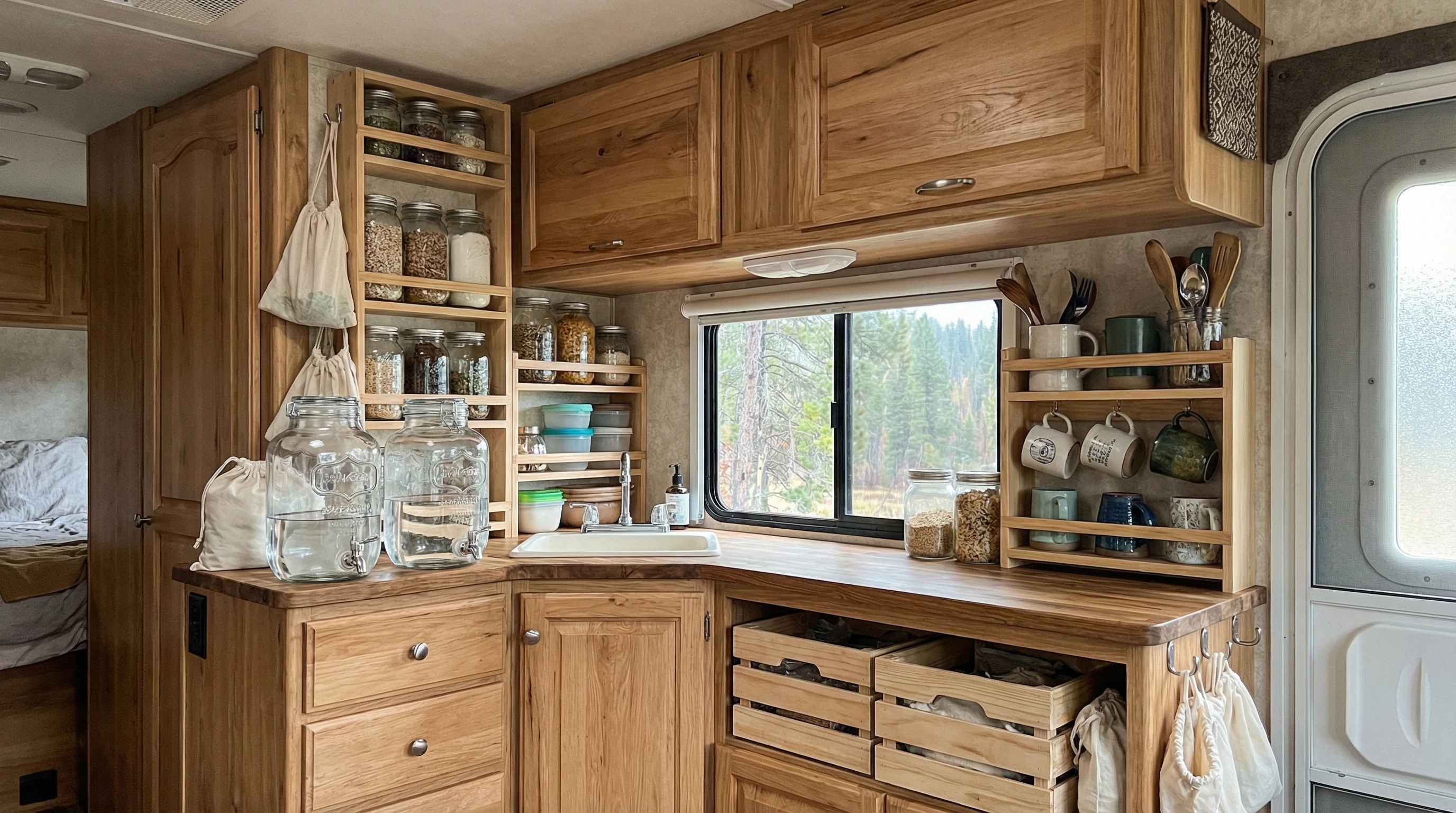
- Water Storage: I carry extra jugs of fresh water, and always fill my onboard tank before heading out. Boondocking sites are mostly dry, so every drop counts. For longer stays, I use a five-gallon water jug with a battery-operated pump that I can refill during trips into town.
- Waste Management: My RV’s gray and black tanks fill up faster than expected. I take short showers and use biodegradable wipes between washes. I also keep an eye out for local dump stations, most of which are free or very cheap at rest areas, truck stops, or city parks.
Basic planning and small investments up front mean I rarely see surprise costs. Double-checking your gear before heading out into the wild is definitely worthwhile.
Budget-Friendly Tips for Boondocking Success
Most of my savings come from simple habits and smart routines. Here are a few things I do to keep costs down while still living comfortably off the grid.
- Conserve Power: I use LED lights everywhere in the RV because they barely sip power. I also choose battery-powered fans or those that run off DC outlets. I only use high-wattage items, like a microwave, when I have plenty of battery or the generator running.
- Use Water Wisely: Doing dishes in a small basin and reusing rinse water for flushing the toilet stretches my fresh water supply. I take quick showers in the RV, but you could also use solar-heated outdoor showers if the weather’s good. Many folks use a gym membership for showers while passing through town.
- Stock Up on Supplies: If you have the room, buy in bulk at discount stores to keep your pantry full without costing a fortune. I meal prep before heading out so I don’t have to go into town often, which saves money on fuel and groceries. Dry goods, canned foods, and powdered milk last a long time off-grid.
- Use Free Resources: Tons of apps and websites list free or cheap boondocking spots. I always check recent reviews to know what to expect. Planning ahead helps avoid last-minute choices that could cost more.
- Limit Generator Use: Generators use up fuel fast, and propane isn’t cheap. I rely on solar and batteries, only using the generator to recharge batteries when absolutely necessary or during a long stretch of cloudy or rainy days.
Day-to-day routines like these turn small savings into huge wins over a month or two. That helps make boondocking sustainable with plenty of comfort on the road.
Challenges You’ll Probably Run Into (And Quick Fixes)
Boondocking is more than just saving money. There are a few snags I’ve hit that are worth sharing. Here are some common bumps in the road and how I handle them:
- Limited Battery Life: Even with extra battery capacity, fridges and other devices can eat up a lot of juice. I check battery levels daily and park for maximum sun. Portable solar chargers for gadgets come in handy, too.
- Running Low on Water: I keep a close eye on my water and refill when passing a public source. Collapsible jugs are easy to store as backups.
- Getting Stuck: Boondocking sometimes means dealing with muddy or sandy roads. I keep traction boards and a shovel on hand, and always check the weather forecast. Reading recent reviews on apps helps me avoid tricky spots.
- Poor Internet Connection: Off-grid areas often lack cell service. I plan my work around good signal stretches. Affordable cell boosters sometimes help, but when needed, you can use free WiFi at local coffee shops or public libraries. Our go-to source now is Starlink!
- Staying Legal: Overnight parking rules change from place to place. I check for current info and look out for any posted signs before settling in. Respecting local rules keeps me out of trouble and helps keep these spots open for everyone.
Most hiccups can be managed with some flexibility and creativity. Staying relaxed is part of the boondocking spirit, letting you focus on the reasons you’re out there in the first place.
Extra Tricks for Stretching Your Boondocking Budget
After a few adventures, I learned some tricks that help squeeze even more value out of every dollar. Maybe these will help you, too.
- DIY Upgrades: Easy fixes like insulating windows with Reflectix, using magnetic screens for airflow, adding window film, or adding blackout curtains help manage temperature and save energy. Scoring used solar panels or gear online is a smart way to pump up your setup without breaking the bank.
- Find Group Boondocking Spots: When traveling with friends, we split costs and supplies. Some spots are perfect for several rigs, and sharing tools or cooking duties helps everyone.
- Barter and Trade: Sometimes, you can trade extra firewood or supplies with other campers if you forgot something. The sense of community really shines in these moments.
- Seasonal Planning: Traveling during the shoulder seasons, spring or fall, means cooler temps and fewer crowds, so I save fuel by using the generator and air conditioning less. In certain states, open ranges allow for more extended boondocking, letting you enjoy off-grid living longer.
- Skip Big Gear Upgrades: There’s always fancy new tech for RVs, but most of my stuff is basic or secondhand. I only upgrade if it genuinely makes off-grid life easier, avoiding unnecessary spending on features I won’t use.
Using these strategies helps me appreciate all the perks of RV travel without worrying much about expenses. Saving money doesn’t mean missing out!
Frequently Asked Questions
Here are some of the most popular questions I get about RV boondocking on a budget:
Question: Where can I legally boondock for free?
Answer: I look for public lands like BLM, National Forests, or certain city or county parks. I always double-check apps or call ahead for the latest info on local rules, and I keep an eye open for posted signs when I arrive.
Question: How do you keep devices charged while off the grid?
Answer: I use solar panels and keep a couple of portable power banks close by. If the weather’s bad, I run the generator just enough to charge up batteries or plug gadgets in while driving.
Question: Is it safe to boondock alone?
Answer: From my experience, yes, but I stay alert and avoid places where I feel uneasy. Locking up my rig and knowing where the nearest town or help is adds peace of mind every time. Carrying a self-defense weapon these days is not a bad idea!
Question: What’s the best way to find water or a dump station?
Answer: I turn to apps like RV Parky, Campendium, or SaniDumps, or ask at gas stations and truck stops along my way. City parks, some rest areas, or local fire stations occasionally let RVers fill up or dump tanks for free.
Question: Can you boondock year-round?
Answer: Absolutely. I simply plan my regions to dodge extreme heat or cold. Winter boondocking needs extra prep, while summer is ideal for chasing cool temps at high elevations or up north.
If you enjoy freedom, adventure, and saving some money as you travel, boondocking is definitely worth checking out. The more you camp this way, the more you’ll spot smart ways to save money while still feeling right at home off the grid.
For plenty of RV tips and creative ways to live well on the road, check out my favorite resources and other articles on my website whenever you want. Feel free to ask questions or share your own tips for stretching your dollars while living your ideal RV lifestyle!
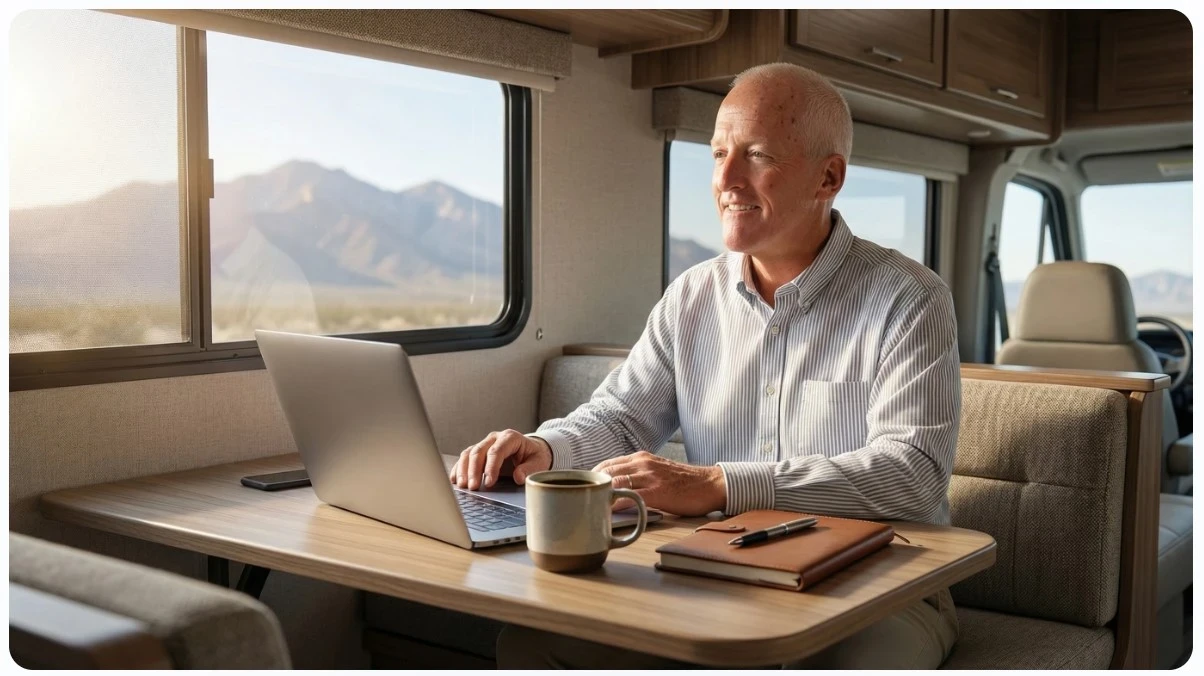
If working remotely sounds appealing, online businesses are a flexible option for full-time RVers. The right internet setup lets you work and roam anywhere. Need some guidance to get started? I’ve got guides to set you on your way.
Heading out with your RV is the ultimate freedom trip, and saving money by camping off the grid makes every adventure a lot sweeter.
________________________________________________________
What If Your RV Could Help Pay for the Journey? Could you make money while boondocking?
Many full-time RVers quietly earn money online: writing, recommending products, and building simple digital assets that generate income while they travel.
You don’t need tech skills.
You don’t need experience.
You just need the right roadmap.
👉 Discover the beginner-friendly approach! Take a look at this post on this website.



Recent Comments