I have noticed an emerging trend among the full time RVers who love their gadgets! And I am in complete agreement on this one! RV awning lights, especially led awning lights, are pretty amazing when you see them on at night! This newer technology allows the daytime fun to carry into the night time without missing a beat. It is surprising how bright these led awning lights are!
There are two ways you can mount these RV awning lights depending on what you like best. They can be mounted up at the top of the awning, right underneath the sidewall awning rail, or they can be inserted in the awning tube and roll up inside the fabric when the awning is retracted. Either way this can be a permanent installation that can be enjoyed each time you use your awning at night.
How Do LED Awning Lights Work?
Are these easy to install? Without getting too technical, I think this is best explained in a video!
Honestly, how cool is the Dometic light kit? I don’t think it will be too long before these kits will be installed on all RV’s before leaving the factory. It makes real sense to find a way to hardwire them to your 12 volt exterior light switch so you can control the power from the inside of your RV. The remote adds that extra feature of convenience!
I like that the strips can be trimmed to fit custom lengths, and the 3M adhesive backing keeps the lights secure when the awning is closed. The wireless remote control adds convenience with its dimmer feature and handy key chain clip, and it functions up to 125′ from the unit. With seven vibrant colors all in one strip, you can program it to fade or step between colors (white, blue, pink, red, yellow, green and cyan).
7-Color RV Awning Lights Features
16′ of colorful programmable LED lights
350 LEDs
Waterproof, long-lasting LED lights
Lasts over 3 1/2 years with continuous use
Simple installation
Trim to fit custom lengths
Includes wireless remote control with on/off button plus multiple program features to change colors
Contents include one 16′ adhesive-backed LED light strip, one wireless remote control, 12 volt AC outlet plug
Energy saving if living off the grid
Enough light to read by if desired
Great for parties!
With the decreasing cost of this technology and the huge advantages of power savings, there is no reason to not switch over to all LED technology in an RV! One RVer we know of switched all his lighting from incandescent to led lighting, including adding led awning lights. With everything on, he said he was drawing less than 100 watts!
If you spend a fair bit of time off the grid, or even if you enjoy full time RV living and have to pay for your electricity use each month, over the long term led lighting could benefit you! Some of the led lights I have installed in my RV are rated for sixty thousand hours of use! Some of the incandescent bulbs I have replaced only lasted for a few months! The filaments in them just don’t seem to last very long. That is why I am a huge fan of this led lighting technology!
Blessings and enjoying your new led awning lights! Howard and Pam
There are those who adopt the full time RV living lifestyle that do carry weapons on board their RV’s! This important article is worth reading if RV travel with firearms is something you do.
A friend if mine, S.M. Ingersoll at laymenstactical.com was invited to help offer his valuable opinion on this subject. I have no experience here. He however has an extensive background in military and national security service as well as he is an NRA certified firearms instructor.
So here is what Mr. Ingersoll has to say on the subject!
“I am not a lawyer and none of the information in this post is to be construed to be legal advice!”
Late last month, my father and I began a discussion about traveling with firearms. My dad has purchased a small RV and was keen to hear my opinions on carrying a firearm while on the road. This sent me on a trip of my own to do lots of research on the subject. I rarely travel myself so I had to rely on the experiences of others to formulate an educated answer to my dad, after all.
The first thing I did was look through several forums and blogs that are more dedicated to this particular issue. The one thing that I was able to take from them is that research on your destination’s local and state laws is paramount. First and foremost is the importance of the decision to carry a firearm with you in the first place.
Carrying a pistol or rifle come with an inherent responsibility that you owe to every single person, place or thing that you encounter. Your decision to carry could affect the lives of many more than just yourself and travel companions. Once that decision is made, the decision on what to carry comes into play.
The primary question here is; what is your perceived threat? Do you spend a lot of time out in more primitive camping areas? Are predatory animals a concern? Do you tend to just pull up to any ole’ parking lot to take a rest for the night? Truck stops? What kind of lockable storage is available in your rig? These are important questions to ask yourself and making a list of your answers is helpful.
RV Travel With Firearms!
Once you’ve narrowed down your needs then a selection is to be made. One thing to keep in mind is that RV’s are small cramped quarters. Shouldering a shotgun or long rifle isn’t going to be a practical option inside the RV. My suggestion here is to have a couple options on board. A handgun of course, makes excellent sense inside a vehicle. I also suggest the consideration of a pistol caliber carbine that shares an ammunition and magazine commonality with your handgun. The same system applies if you’re more of a wheel gun fan, carbines are available in .38spc/.357mag and .44mag.
Of course, you have the option to carry whatever you wish, but this pairing in my opinion works well for the traveler. Whether you decide to go the route of a two firearm solution or a single firearm is a very personal decision and budget certainly comes into play here however, there are a few budget-friendly options in these categories that offer all the benefits at the price of one “top shelf” handgun.
Gun laws are what will be the most important thing to consider after you’ve decided to carry a firearm in the first place. Different states and municipalities have different laws and ordinances and when you place yourself with a firearm in that area, your ignorance of these regulations will not be a defense to your prosecution if you are discovered armed. These laws can limit the magazine capacity, length, and size of what weapon you can legally possess. There are a few websites that consolidate applicable laws in an easy to find database. handgunlaw.us is an outstanding and very well-researched example of one of these.
Getting yourself a concealed handgun permit/cwp/chl…whatever your state calls it, is a very advisable thing for you to do. Many states have reciprocity with other states that allow you to freely carry your loaded and concealed handgun into and through that state, without fear of prosecution. Be advised though, that these reciprocity agreements do tend to change some, so research immediately before your trip to see if anything has changed.
There are also many states that are so-called “open carry” states. This means that a loaded firearm can be openly carried without breaking any laws. What this means to the RV traveler is that your firearm can be close at hand provided that it is concealed from view in your rig. Whatever state you are from, if you are able you should have a concealed cary permit regardless of where you plan to travel to.
If you still have any questions after your research is done, a phone call or visit to the attorney general’s website for the state you plan to travel to could help to clear up a lot of things. Many places also recognize the fact that when your RV is no longer moving down the highway and is serving as your “home”, the legal definition of your vehicle changes to a dwelling much like a hotel room is recognized as your dwelling when you’re inside. This is a good question to have in mind while you’re researching laws or if you call to the attorney general’s office.
If traveling through more restrictive states, the federal standard for transporting of a firearm is to have it locked in a secure area (locking storage box or safe) and ammunition is to be locked away separately. I myself have no desire to visit places that would require me to give up my right and ability to protect myself and my family.
The important thing to take away from this post is that your own research is necessary and so important to keep yourself on the right side of jail walls. The reason for traveling is to see wonderful sites and enjoy your time on the road. Simply ignoring the laws will result badly for you. Make good choices and train with your chosen firearms. laymenstactical.com. That is what will make the difference if you’re ever forced to use them in defense. Enjoy your travels and have fun. As always stay safe, train and have a good un’.
As Pam and I travel we keep the weapon handy, but locked and the gun ammo separate from the handgun per recommendations of Stephen. If needed, the gun could be quickly placed into service. If questioned we are abiding by the laws of most states. Diligence is needed when it comes to gun laws to keep up with things as they possibly change!
Thanks to Mr. Ingersoll for allowing me to post this helpful article on RV travel with firearms. Please visit for more information on education, instruction, and making the average gun owner more skilled with their firearm.
Blessings and Safe Travels, Howard and Pam
Summer 2015: I recently visited with Stephen while we were passing through North Carolina. He recommended a fantastic handgun that I bought, and I found it easy to handle. His training skills are awesome! He was able to teach me quite quickly how to SAFELY handle the gun. I had never fired a weapon prior to that time but I found the process very enjoyable. If you are in the Raleigh area, reach out to him if you want to be “armed and fabulous!”
Fall 2016 Update: Pam and I were passing through North Carolina again and had a chance to visit with Stephen while at a local shooting range. I joined he and his Dad to hone our skills shooting at targets. Stephen was awesome in helping me to correct a few shooting issues that take me left and low of my intended target. Thanks Stephen!!
People looking to join the full time RV living lifestyle often decide they need work camping jobs to make ends meet. But, if they have never done this type of thing before a big question they may have is what are RV park jobs really like? You can visit my discussion on work camper job listings to see how to acquire RV park jobs.
Pam and I are now in our seventh year of full time RV living and having RV park jobs. We can give you some great advice on the best way to deal with situations, not only with RV park owners and managers, but also with fellow work campers. There are things you must not do in order to survive this kind of environment.
Don’t get me wrong, the full time RV living lifestyle and work camping is what we enjoy doing and will continue to do so for the rest of our lives. We love it! But we have learned a few things along the way and I want to share those with you so you have a better experience right from the start!
Let us assume that you have decided on where you are going to work, you found RV park jobs that match your job criteria for what you are willing to do, and you have made contact with the park owners/managers. There are steps at this point we would advise that you take!
RV Park Jobs: Get Your Job Responsibilities in Writing!
If the RV park jobs employer does not have a work camper agreement for you to sign, then I would suggest you write one and send it to them. Do this before you commit to any RV Park job! You want your job responsibilities outlined long before you drive hundreds of miles only to find out that you are cleaning bathrooms when they said you were going to be helping with activities.
One of the phrases we look for in a work camper job listing are the words “and any other duties as needed.” What does that mean? It could mean cleaning toilets! Hey, I have nothing against that. I have done lots of that in my life so now I’ll leave that to someone else. Some people don’t mind, others prefer not to. We have been in some pretty disgusting bath houses after a busy weekend. I was glad I was not cleaning them!
My point is to apply for RV park jobs you want to do and be sure you get it in writing what your responsibilities are. If the employer changes things on you then you have it in writing and can approach them with assurance that you are within your rights to say no. If things really don’t work out after having a discussion with the “boss”, then you are also within your rights to consider the work camper contract null and void.
Pam and I have always had a clear understanding with our work camper employers and have not had an issue. We got agreements reviewed and signed before making the commitment, we kept in touch before ever showing up to be sure things had not changed: new managers who will dispute the agreement you made with the previous managers/owners, they decided they did not need you and forgot to tell you, your RV won’t fit in their campground, you discovered they don’t have 50 amp electric service RV site for you, etc.
RV Park Jobs: The Best Way to Get Started!
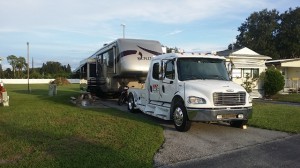
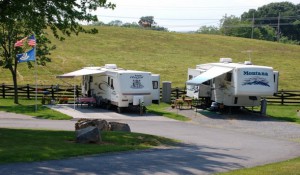
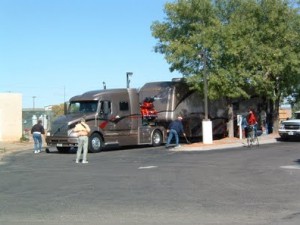
When starting out working RV park jobs we made the assumption that everyone was like us: they were there to work, just like a real job, and enjoy the work camping lifestyle and full time RV living! We found out that was not true! We wondered sometimes why people took these RV park jobs? They clearly hated being there and had no interest in giving their employer a honest days work. We call that the Ugly Workamper! So here’s how you can start off on the right foot as you begin your new work assignment:
Watch what you say around others. There are always a few gossipers who want to talk poorly about everyone else around them. They will do everything they can to make you look bad around others. Just be careful till you get to know what people are really like, then form friendships with those folks you can trust. We have made some lasting friendships with people from all over the country from RV park jobs!
Be thoughtful and encouraging around your co-workers. Don’t get involved in the gossip!
Be interested in other people but don’t be nosey. People will be happy to share with you if they trust you and sense you are a genuine person who really cares about them!
Be open minded as things change. We have worked RV park jobs where changes were needed for the park to function better. Support your employer and don’t be a know it all! Only offer suggestions if they are asked for.
Be careful to not inadvertently hurt someone’s feelings. It can happen! We have done it. The first thing to do is apologize, ask forgiveness and move on. When you live and work in close proximity with the folks around you stuff can happen. You just have to be mindful of that. Work Campers are like having an extended family. You can really create some strong bonds that will last a lifetime. And like family you can hurt the ones you love!
Don’t worry what others may say about you. There are always people who will just be that way: they just have to stir up trouble. There are not many of these, but they do show up and can ruin an entire work camper workforce in short order. If you ignore them they will go away! Most times their poor job performance and attitude gets them rolling out of the RV park!
Keep records of the hours worked just to be sure you are getting compensated for your efforts.
What to do if Things Changed After Arriving at your RV Park Job
Sometimes, but not very often, despite you best efforts to verify everything before you arrive at your new RV park job, things may not be as promised. So what do you do?
If you did what I suggested earlier and you have a written work camper agreement then you are within your right to ask for a meeting with your employer and discuss the variance between the job being asked to perform and what you have in writing. If they are unwilling to be open to the discussion then you have every right to pack up and head your RV right out the exit gate! Your home does have wheels!!
But, before you go be sure you have thought it through and are not just acting out of frustration stirred up by an incident that will probably blow over. We have not had an issue like that, but we have had friends that just no matter how hard they tried they just always seemed to blow everything out of proportion.
If you have never worked in the hospitality industry before, it is not like working in an office or as a tradesman. You are dealing with people of all kinds of backgrounds who are coming to have fun. They may have had travel issues before arriving, they may have traveled with kids who fought the entire way there, etc. They may not be at there best when they arrive at the RV park!
Our friends always seemed to get so easily offended at what people would say to them and threaten to quit! “I don’t need to be treated that way!” was the typical line we heard. It’s true, but that is what RV park jobs can be like, especially when it is really busy in the campground. We have worked at some parks that only had 200 RV sites, and they had more than half of them turning over on a weekly basis, and usually on the same day. We worked Balloon Fiesta in Albuquerque NM one year. The park we were at went from empty to full in a matter of hours.
I was guiding RV’s to sites for that particular RV park job. Every few minutes a rig pulled in. Not all of them were having a great time yet. So, we greeted the guests with a smile, told them “now that they had arrived we are going to have a great time, and follow me, I’ll get you parked!” By the time they stepped out of the RV, at their site, they were happy campers!
You can’t have a thin skin and make it in this business. Just see it from the other persons viewpoint and life will be so much easier. Have compassion and you will do fine. You won’t please everyone, but you will handle most situations just fine if you take that approach! I worked with our friends to help them get a better understanding of the mindset needed to survive and they were able to have a much better work experience.
The best advice I can give you about having success working RV park jobs is to just communicate with your employer. If you are having trouble doing the job, it was not what you expected, they did not provide the work experience they advertised, etc., speak directly to them. If things can’t be worked out your home has wheels and you can change your situation.
I will say that in the six years of working RV park jobs, we have never broken a contract. We did our jobs, communicated with employers when problems arose, and things were always resolved. The one thing you really don’t want to do is give work campers a bad name by not fulfilling work contracts. Employers are counting on you to fill these RV park jobs for the timeframe you committed to. If you leave early you put them in a bind!
We would love to hear what you think about this topic! If you have questions we would like to help you out. Just leave a comment below and we will get back to you!
Enjoy your work camping experiences and your full time RV living lifestyle!
When it comes to RV safety on the road, you should be checking your RV tire pressure before each trip! The only thing that allows the loaded RV to travel safely down the road is the air in those tires. Too little or too much RV tire pressure can lead to tire failure. So what is the correct RV tire pressure for your RV? I will get to that shortly!
RV Weight Management
Before you can determine the correct RV tire pressure for your RV tires you have to know how much your RV weighs with all cargo and passengers on board. Some RVers really don’t know how much cargo carrying capacity (CCC) their RV has. They figure if there is space available on the RV then they can put something there. RV safety on the road has a lot to do with the loading of the RV!
Here are some statistics for you:
Fifty-eight percent of RV owners exceed the weight rating of their RV. That is an average of all RV classes on the road today.
If that statistic is broken down, fifty-nine percent of motor homes are overloaded, sixty percent for toad vehicles, fifty-one percent for travel trailers and fifty-five percent for 5th wheel trailers.
It is not unusual for an RV to be out of balance by a thousand pounds or more from side to side.
I can’t stress this enough! It is so important to know what weight is being placed on each tire so you can inflate them to the proper cold tire pressure! Your RV’s data plate will give you the vehicle’s weight when it left the factory, but even there they are not giving you the weight values at each tire position. So, once you have your vehicle loaded and ready for travel take it to a weighing facility where you can have each tire position weighed. With that information, you can inflate your tires based on the tire manufacturers load charts.
“How do I know what RV Tire Pressure to inflate my RV Tires to?”
Depending on the load on each tire, inflate your RV tires to the cold pressure rating listed in the inflation tables for your particular tire. These inflation tables are easy to find on the tire manufacturers website.
Once you know what the correct RV tire pressure values are, inflate to the largest weight value on each side, plus a safety margin of fifteen percent. Hopefully, you have enough there to not exceed the maximum weight value of the tire. If you do not then one of two things may be wrong: you are overloaded or the tires are not the correct type for your RV.
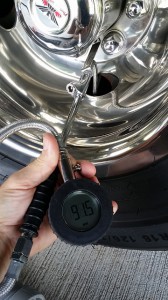
For trailers with factory tires installed, I have read it is best to inflate the tire to the maximum cold pressure rating. Even then, you should know how much weight each tire is carrying so you can verify that the tire weight limits are not being exceeded. I like using a digital tire pressure gauge that will go to 150 psi. They are usually better quality and are more accurate!
Keep in mind that under-inflation is worse than over inflation when it comes to tire life! A tire that is eighty percent or less of what it should be inflated to for the load it is carrying is considered to have been run flat. What this will do is ruin the internal structure of the RV tire if driven in that condition.
Being an RV inspector and teacher, and that I live full time in my RV, I find it easy to get in discussions with my neighbors. My first concern with my RV traveling neighbors is safety! If they want to listen I will gladly share what I have learned.
One park we were staying at I got in a discussion about RV tire pressure with an RVer who had just arrived with his new rig. He swore his RV tires were inflated by the dealer to the correct pressure and he did not need to worry about his current RV tire pressure. So, I bet him a glass of wine that they were not set properly. He was also a new RVer so I was confident I was right. We checked the RV tire pressure on all tires and verified those values with the data plate load specs. He was underinflated on all of his tires.
And yes, I did enjoy the glass of wine!!
What Can Happen if my RV Tires are not set at the Proper RV Tire Pressure Rating?
If your RV tires are not operating at the correct RV tire pressure ratings, several things can happen. If they are under-inflated, the tires will develop excessive heat during travel, they will wear unevenly and have an uneven tire footprint. If they are over inflated then there will be a reduction in vehicle handling, braking and vehicle ride. Over inflation also leads to a smaller tire contact point with the road. In this condition, there can be impact damage to the tire rim when hitting potholes.
About using an RV Tire Pressure Monitoring System?
Pam and I do not move the RV without the RV tire pressure set at their proper values, and the RV tire pressure monitoring system engaged. The only way to know what is going on with our tires during travel is to be able to constantly monitor the RV tire pressure and temperature. This is so important, especially when pulling a fifth wheel or travel trailer. Without that immediate feedback, you can drive many miles before you know that a tire has failed and is doing serious damage to your RV!
I hope this information has been helpful! There is a lot data out there when it comes to RV tire pressure and RV tire safety. Please visit our friends website rvsafety.com for more information on getting your RV weighed. I would also recommend spending some time at rvtiresafety.com to find out more from a tire design engineer who worked in the industry for forty years.
Here’s wishing you safe travels, whether you are enjoying the full time RV living lifestyle or you just hit the road when you can. Be safe!
Blessings, Howard and Pam
Please feel free to leave a comment before you go!
One of the best RV buying tips I can give you when you are purchasing a used RV is to get it inspected! By spending the time to inspect a used RV, you will save yourself headaches later on. You will also be told all the things on the RV that need attention before you take possession of the vehicle. What does it take to inspect a used RV? Please read on and I’ll uncover what this process involves!
I believe you deserve an RV that will give you worry-free travels and create lasting memories for a lifetime. Traveling in an RV is one of the most enjoyable ways to visit places that you want to see! You may have already discovered this and are now ready to buy an RV.
So what would be some good RV buying tips? I think these are some of the most important ones to consider!
Top RV Buying Tips!
Do your homework: decide on the class of RV you think would most suit your needs, whether its for part time or full time RV living, and rent one. There is no better way to uncover things you may not have considered then to actually take an RV out and live in it for a week or two.
Use the Power of the Internet: visit the RVing blogs and read what others are saying about your RV choice. RV.net and RVforum.net are great sources that RVers love to post too. rveducation101.com is another good source!
Visit Dealerships: only do this after you really know what you want! Take a look at different makes, floor plans, model years, etc. Don’t get pushed by an RV salesman into making a decision. Leave the checkbook at home! Never buy on the first visit. Take pictures, notes and go home and think about any purchase seriously before moving forward. Most dealership’s staff are an asset in helping you make a decision, but it is yours to make and you don’t want to make a very expensive mistake!
NADA valuation: be sure you know what the NADA value is for the RV you are seriously considering purchasing. Comparison shop at dealerships either online or in person. Craigslist and Ebay have lots of used RV’s for sale. Be careful here! You may find a good deal, but do your homework. There are lots of well-intentioned people who want to sell their used RV at a fair price, but they are also grossly unaware of issues that may bring future problems! Get it inspected!!
The Best of the RV Buying Tips You Will Need!
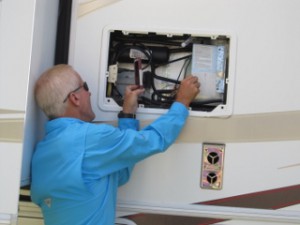
Inspect a used RV before you sign on the dotted line! Let me say that again because people miss this one and wind up buying a money pit! Be sure to have that used RV inspected by a certified RV inspector. Not an RV tech, not the dealer staff, not a friend of yours, a certified RV inspector who will offer a UNBIASED inspection of the RV!
It is the job of the certified RV inspector to get the RV to tell them the condition of the vehicle at that point in time! Through careful analysis of the major and minor systems of the RV, including oil and coolant analysis, their findings allow the buyer to know the exact condition of the RV!
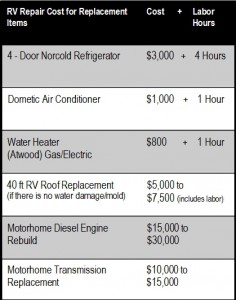
What do things cost in an RV?
You see, if you purchase an RV with any of these items that may have an issue, you will not only be paying for the RV, but the cost of the repairs that should have been made before the RV was sold!
What Exactly is an RV Inspection?
When you inspect a used RV, or should I say have a professional certified RV inspector perform an RV inspection, what exactly is being done? It is much like a home inspection. The RV inspector will spend as much as six hours examining the vehicle and testing it’s systems. Here are just some of the items being evaluated:
Exterior items being evaluated: roof, vents, AC units, sealant, running gear, hookups, steps, etc.
Slide Outs: operation and integrity of the system
Electrical Systems: 120 volt and 12 volt systems, hot skin test, main panel and fuse box evaluation, inverter test, converter test, gfi’s, and generator operation.
Propane System leak checks
Water Systems: city supply and water pump function, evaluate and test all plumbing onboard including function of gate valves.
Appliances
Interior condition and appearance
Furniture condition
Verification of vehicle data information.
Depending on the level of certified RV inspection that a person wants, the computer generated report detailing the inspectors findings can have 15 to 100 pictures included in it and be 50 to 100 pages in length. The first few pages of the report summarize the major issues that may need immediate attention in the RV. The rest of the report details the items the RV inspector examined and all findings that were observed at the time of inspection. The NADA valuation is also included so the buyer knows that they are paying a fair price for the RV.
I believe you deserve to find an RV that is a good buy, and is trouble-free at that point in time! If you would like to know more about this service, you may drop me an email at howard@yourfulltimervliving.com or leave a comment below.
If you would like to tackle a full-blown RV inspection on your own, check out my discussion at this link. If you are a do-it-yourself kind of person, you may have the skills to save time and money by following my advice! I have trained over 1,300 people to be RV inspectors since 2010.
What is the best RV buy if you are looking at the full time RV lifestyle? There are many considerations to be made when finally deciding to choose an RV that will be your home on the road! Let’s see if I can’t help you by suggesting some things to consider as you move forward.
Example Front Living Room Floorplan
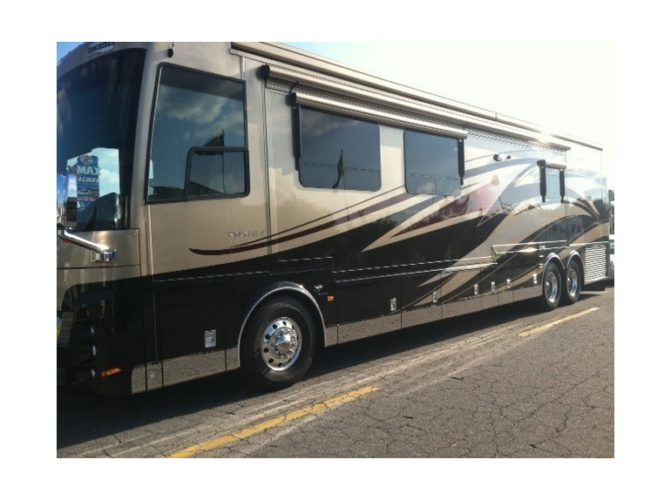
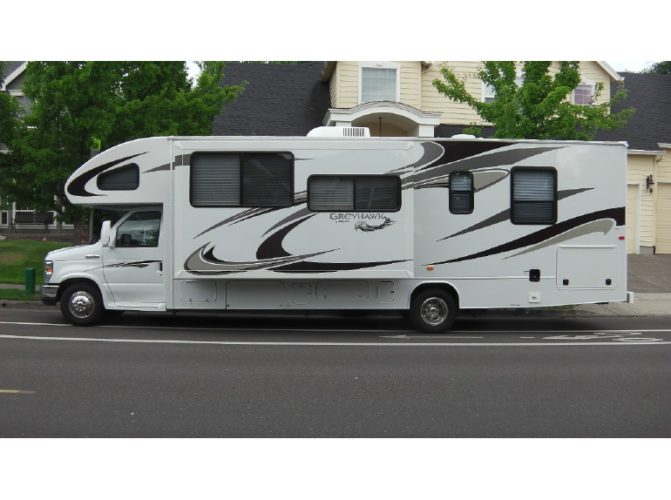
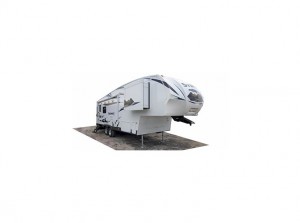
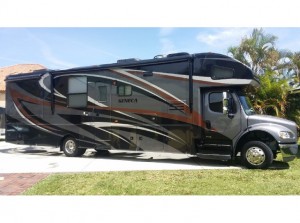
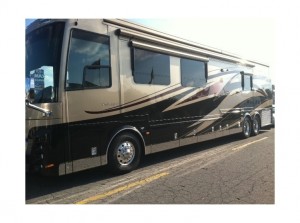
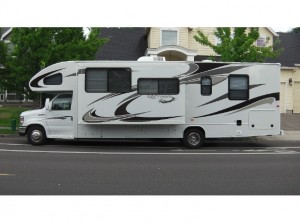
If you have traveled in an RV before, it does make the choice a little easier because you can visualize yourself living in an RV full time. You have had some experience with what may work and what will not work as far as the best RV buy for you. You may have already decided between a motorized vehicle and a towable. You may have decided between a bus-style RV, known as a class A RV, or a cab-over style, referred to as a class C RV.
You may have seen travel trailers that are pretty nice! They do give you a lot of bang for the buck. Perhaps you have looked at 5th-wheel RVs. They are more like living in a one-bedroom condominium. The thing is that each one of these types of RV has its own advantages and disadvantages depending on how you plan to use your RV home.
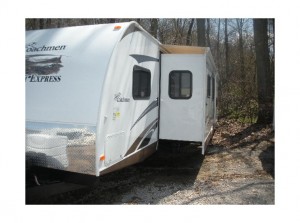
travel trailer
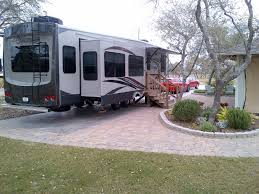
5th Wheel Living
A Question to Ask Yourself: What is Your RV Lifestyle Going to be Like?
For full time RV living, will the best RV buy be a class A RV? If you are moving around a lot, you don’t want to worry about backing trailers and hooking up the tow vehicle to the trailer all the time. Do you want more kitchen space so you can prepare the kind of meals you are used to? Kitchens in 5th Wheels are the best when it comes to that consideration!
Are you going to be workamping where you will be sitting in a location for months at a time? In this case that kind of lifestyle is really tough on a diesel pusher class A RV because they don’t do well when they sit all the time. They are meant to drive in order to keep the systems from deteriorating.
Will you be running a business from your RV while you travel the country? You will want to find an RV with features that make for a comfortable workspace and do not interfere with the rest of the living space. Both class A RVs and fifth wheels have nice features in this area!
What Do You Need to Have in Your Best RV Buy Home?
This is where a list should be made! What do you have to have as you consider the best RV buy for you? The biggest mistake you can make is to start looking for an RV before considering everything I have just mentioned. Before you know it, you are at a dealership, and a good salesman shows you an RV based on some things you may think you want but may not have really considered.
Then you see an RV: you have fallen in love with the colors, the curtains, the way the interior lights look, the cool rope lighting, the high-tech features, etc. It is essential to know what you really want, or at least even think you want, and get those features included in the RV you choose! If you make concessions now, you will be unhappy later. Pam and I have talked to many who admitted they made mistakes in choosing their first full time RV home! We went through this process, and our first RV home lasted for seven and a half years before our needs changed, and we upgraded to a new full time RV home.
Let’s Make a List!
How many bedrooms and bathrooms do you want?
Do you need an office or a work area?
How much storage do you need? More importantly, how much weight will you put in the RV? If you have three thousand pounds of stuff, you better find a rig that can carry everything you plan to load in it! Please verify the Cargo Carrying Capacity of the RV!
Where are you going to travel with your RV? An RV can require anywhere from one to three air conditioner units, depending on the climate you choose to visit.
Do you need a washer and dryer? For the full time RVer, an apartment-type washer and dryer is a must! Many nicer RV’s automatically include this feature.
What kind of extra vehicle do you need? If you choose a class A RV, you will need a car. If you pull a trailer trailer RV, then you will have a truck to use when not towing the RV. But is that going to work out all the time? Some people add motorcycles to the list to fill the gap in these RV choices.
Do you need 30 or 50-amp electrical service? The difference is on the low end you only have 3,600 watts of electrical power available at any one time in your RV. You can have 12,000 watts of power on the higher end, which is more appropriate when considering the best full time RV.
Do you want a class A gas or diesel RV? Do you want a travel trailer or 5th wheel? What kind of truck will work best to pull a trailer? What kind of car can you pull behind your class A RV? They don’t all work.
Advantages and Disadvantages!
Class A gas motorized RVs are less than their diesel counterparts. You can get a lot of bang for the buck in this motorized RV. Maintenance costs are less. However, they do not drive as well as diesel RVs and can be affected by wind and semi-trucks on the road. They will need engine service sooner at higher mileage as they are less durable than their diesel counterpart. But these are better at sitting for more extended periods of time.
Diesel class A RV’s do have a higher purchase price. They also have higher maintenance costs if you are worried about expenses and have a tight budget for your full time RV lifestyle. But you can drive it many more miles than a gas version. A half million miles is not uncommon for this type of vehicle. They drive better on the highway and also in the mountains. They have much more torque and can pull a more significant load if you want to pull a cargo or vehicle trailer behind.
Travel trailers are light and can be pulled with a production truck suited to the specs of the RV trailer. You can get a lot of bang for the buck with this choice. The newer models have large slides, all the amenities of their motorized counterparts, and they can be lived in full time. The downside will be traveling long miles with them and the lack of storage. Travel trailers can be squirrelly on the highway depending on road conditions. And you have to be prepared to back your rig. This can be an issue if you have not done much trailer backing.
Fifth-wheel trailers are much better in most of the downsides I listed for travel trailers. They tow better and have vast amounts of storage. I believe they are easier to back than a trailer, but that is just my opinion. When you get one of these that is up to forty feet long, you have to practice a while before you get comfortable handling this type of RV setup.
Okay, that should get you thinking about the best RV buy for you. After you have made your list of must-haves and decided on the RV class that suits you, go looking. Don’t let any salesman talk you into something you don’t want or need. If you find something you really like, don’t jump at it. Sleep on it! Take pictures and go home and consider all that you saw.
Whether you choose a new or used RV, take your time! Get a certified RV inspection if you choose a new or used RV. There is nothing wrong with choosing a used model. You may have to look a lot longer to find one that will suit you, but the savings could make for the best RV buy for you!
Thanks for stopping by our website! I hope this information has helped you out!
Please leave a comment before you go! Let us know if we can help you make your decision. If you would like more information about certified RV inspections, leave me a comment below, and I will get back to you!
Blessings as you search for your full time RV home! Howard and Pam
Fulltime RV living can have its challenges when it comes to the kitchen! In our six years of living the fulltime RV life, we have adopted some methods that really help out in the RV kitchen. We are thankful that there are great RV kitchen accessories out there that aid in the enjoyment of cooking aboard our RV! One of these is definitely the portable induction cooktop!
Most RV kitchens are very small when it comes to counter space, storage, and appliances that are able to cook like you do at home. This is not such a big deal for the occasional RVer, but for those living the fulltime RV lifestyle, and who are not LEO’s (Lets Eat Out), it can be a daily challenge to put together three meals a day if you have not carefully thought out what accessories are going to be in your RV kitchen.
After all, this is not like a sticks and bricks home where you can have everything in your kitchen that you could possibly imagine. In an RV, everything that comes on board is considered as weight and becomes part of the cargo carrying capacity. This is an important thing to consider when packing up the RV to hit the road! More weight being carried than the RV was designed to can lead to many issues. The worst one will be that at some point you could be on the side of the road with a tire related emergency if your RV is overloaded!
So What Should You Bring Along?
Let’s face it, RV microwave/convection ovens are small, for daily use the propane cooktops are not the sturdiest out there, the gas ovens do not cook as evenly as their larger counterparts, and RV kitchen cabinets are placed in areas that are either too high or too low for the user. So you see, we have a few challenges in our RV kitchen!
Would we change it and go back to a sticks and bricks home so we can have a better kitchen design? Never!! The great thing about the RV industry and new technologies are that they make their way into RV’s. Our eight-year-old RV, although still considered a luxury 5th wheel by today’s standards, has an outdated kitchen. But, now due to the portable induction cooktop option, we can bring it up to date with current cooking trends and reduce our RV’s weight.
We can eliminate unneeded cookware that takes up space and go with lighter weight nesting cookware that offers ten ways to cook and takes up a lot less space than what we were using for the propane cooktop.
Pam and I are not the biggest fans of propane cooking although to us it is still better than traditional electric element cooking. However, a few years ago we had a small propane cooktop fire in our rig and since then we do whatever we can to avoid using this volatile liquid!
So, What is Induction Cooking?
Compared to more traditional sources of cooking where heat is created by burning a gas or electrically heating an element, induction cooking uses the cookware itself as the source of heat. Electromagnetic technology has been around since the early nineteen hundreds. The process used in a portable induction cooktop is to electro-magnetically excite the tiny molecules in the metal contained in the stainless steel or iron cookware.
Why is a portable induction cooktop one of the best RV kitchen accessories?
It immediately creates more counter space because you can place it anywhere you want to cook. So, that cover that goes over the propane or electric cooktop can now be used as more available counter space. Unless you are frying something you will not have to use the exhaust fan. You can cook at the kitchen table if you like! The best part of using this RV kitchen accessory is that it cooks safely! You can’t burn yourself on the cooktop. If you have a propane stove, you no longer have to worry about the volatility of using propane gas and possible carbon monoxide dangers.
Other Advantages!
It does not put out the excess heat that other cooking methods do. When it comes to cooling an RV in the summer, avoiding any additional heat sources is a good thing!
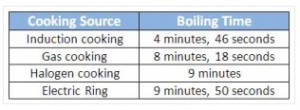
It heats up faster than gas and is more responsive to immediate needs for a change in cooking temperature.
They are easy to clean!
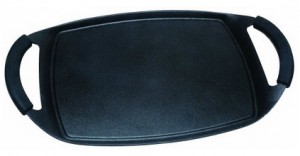
RV kitchen accessories designed for the portable induction cooktop expand its capabilities: stainless steel nesting cookware saves space, induction disks expand cookware options, and griddle attachments allow for a more diversified menu.
Take it outside to cook or to keep food warm when having a gathering at your RV!
More cooking features than on an RV propane or electric stovetop: countdown timers, auto pan size detection, power level control, overheat sensors, auto shutoff, etc. How many features you get will depend on the make and model you buy.
Okay, now I think you understand why I say that love is a portable induction cooktop! Well, that is in the RV kitchen anyway!
Please leave a comment before you head off to go shopping!!
If you are looking for an RV Inspection in Florida, then you will be happy to know that there is a national organization, and local inspectors, that are available in Florida to do certified RV Inspections!
Whether you are a casual RVer, one who is looking to be a full time RVer, or you are already enjoying the full time RV lifestyle, when purchasing a used RV, you should have an RV Inspection performed on it to be sure you are not buying a money pit!
What is an RV Inspection?
An RV Inspection is an in-depth analysis of the condition of a recreational vehicle, at that point in time. It is like the doctor asking the patient, “what is wrong with you right now and what have you observed?”
The RV Inspection is performed in such a way that inspection items are addressed that you may not have thought to look for! Fluids analysis can be performed while doing the RV Inspection to get an even better understanding of the mechanical worthiness of the RV!
The truth is most RV buyers do not know what they are looking for when it comes to the overall condition of a used RV. When they are considering their RV purchase they are more interested in the floor plan, the color schemes, and the amenities. They don’t know about the items that really could cost them a lot of additional dollars unless a detailed RV Inspection is performed on the unit!
Who are the RV Inspectors?
They are NRVIA-certified individuals who have been professionally trained and certified to perform a top-notch RV Inspection! Most of them are RVers themselves, and some are full time RVers who run their inspection business out of their mobile office: their RV home!
They have received the best RV Inspection training in the industry. They are tested along the way and must pass all certification exams, as well as the hands-on applications, and in the field testing.
Why Use an RV Inspector?
Because, and most importantly, they are giving you an unbiased, in-depth, and independent RV Inspection. The RV inspectors have no part in the sales process, therefore, they are not going to be tainted by the need to make a sale. They have your best interests in mind! They are working for you!
Once the visual RV inspection is complete, the RV inspector will use software, modified for their use, to create a detailed analysis of what the RV told them on that day of the inspection. It will include a summary page detailing the most critical issues that an RV buyer should consider, as well as photos and breakdowns of each of the specific inspection categories on the RV.
Who am I?
My name is Howard Jaros. I am an NRVIA lifetime certified member of the NRVIA. I own HMRVI Corporation, and professional RV consultant company. My goal is to help people adopt and love the RV lifestyle. I am a full time RVer and have been since 2008. I run my RV consulting business from my RV home.
I would be happy to answer any questions you may have. This is how you can reach me:
By email at howard@yourfulltimervliving.com
Or, you may leave a comment below and I will get back to you shortly!
Thanks for visiting yourfulltimervliving.com! I hope you found this information useful as you consider buying a used RV! I also hope you now know the importance of having an RV Inspection performed on any used RV you are considering. We want to protect you from buying a money pit as well as have you enjoy worry-free travels once you do hit the road in your home on wheels!
If you would like to tackle a full-blown RV inspection on your own, check out my discussion at this link. If you are a do-it-yourself kind of person, you may have the skills to save time and money by following my advice!
Many Blessings as You Look to Enjoy the RV Lifestyle! Howard and Pam
Click Here to See if Your Kidde Fire Extinguisher is Affected!
RV Inspection Service
Do you have the desire to travel in an RV with your family? Do you want to do that so you can create lasting memories with them while enjoying the freedom that only comes when you travel in an RV?
Do you know what to look for when buying a new or used RV? Have you thought about getting an RV inspection done in order to avoid buying a potential problem, or even a money pit?
Why not hire an independent RV inspector to assist you with this process?
Like having a home inspection done, why would you not want to spend the money on an RV inspection? A stick-built home and an RV are both homes with all the same kinds of systems. The only difference is one has wheels!
Buying an RV can be a huge investment, and you can never know too much about the RV you intend to purchase. That’s where an RV inspection can help!
But, whether you’re shopping for a previously owned RV or a new one, it’s important to know the RV’s actual condition before making an offer. RV inspectors visually examine more than 500 items both in and outside an RV. Detailed inspection findings are then presented in a proprietary inspection report that is generated from the facts gained in the RV inspection.
Please keep in mind that the goal of an RV inspection is not just to inspect the equipment, but also to educate the potential buyer about the RV’s condition. This is a snapshot of what the RV is revealing now.
During the inspection, an RV inspector will explain the condition of the RV. You will also be provided with an RV inspection report to help you make an informed purchasing decision. Without that knowledge, you could just be buying a money pit!
Why Do You Need An RV Inspection
Many RV buyers don’t know what to look for when purchasing an RV. This could lead to ending up with costly repairs after the purchase. When first looking at an RV people get excited about the floorplan, the colors of the RV, it has cool lighting, etc. They are not focusing on the things that could cost thousands of dollars to repair if not identified at the point of sale!
Also, many private RV owners put their RVs up for sale thinking that their unit is in tip-top shape, not realizing the potential problems they could be passing on to their buyers.
You may have heard it said that there are things you don’t know, and then there are things that you don’t know you don’t know. A professionally trained & certified NRVIA RV inspector can spot the things that you might not think to look for while providing you with a thorough, independent, and unbiased inspection of the equipment.
Make Your RV Easier to Sell
Next to a home, buying an RV is one of the biggest investments most people will ever make.
As a seller, you can help to provide prospective buyers with the peace of mind by having your RV professionally inspected by an RV Inspector.
Having a complete RV inspection allows you to plan ahead for any repairs that may affect the selling price.
Your buyer will feel more confident about purchasing your RV, and the inspection report can help reduce post-sale issues.
With a comprehensive, easy-to-read report detailing everything that was examined by your professional RV inspector, you can confirm that your RV is a dream come true!
Prior to the inspection…
Prepare a list of questions or concerns about the RV and provide them in advance. This will help ensure that your concerns are addressed and that we can make special arrangements if necessary.
Ensure all areas of the RV are accessible to the inspector. For example, if the washer/dryer is in a closet, all clothes and belongings should be removed from that closet.
Be sure all electrical outlets are accessible, all appliances inside and outside the RV can be tested, the RV is hooked up to all services so everything there can be tested. Your inspector will verify these items before arriving for your scheduled appointment.
During the inspection…
It is of particular importance to be present AFTER the inspection, if possible. By spending time with the inspector, you will have the opportunity to:
See the condition of each key component throughout the RV firsthand, giving you a better understanding of the RV and the resulting inspection report.
Help ease any concerns about findings that may seem distressing on paper, but may just be superficial.
Save time and avoid frustration by learning about the operation of various appliances and components.
Learn about maintenance needs and procedures, and explain how and when to check items that require periodic monitoring.
Have all of your questions and concerns addressed.
If it is not possible to be present at the RV inspection, and sometimes that is the case as the RV is not located near you, the RV inspector will contact you after concluding the examination to discuss the facts gained from the physical examination of the RV.
If you would like to tackle a full-blown RV inspection on your own, check out my discussion at this link. If you are a do-it-yourself kind of person, you may have the skills to save time and money by following my advice! I have trained over 1,300 people to be RV inspectors since 2010.
After the inspection…
Read your inspection report thoroughly. If you have concerns or need clarification, no matter how minor the issue, please do not hesitate to check back with the RV inspector. “We are always willing to help answer all your questions about the RV inspection report.”
Please be sure to use a qualified, trained professional to inspect your RV. An RV purchase is a big investment, and you deserve to have confidence in your financial decision. Please don’t consider an RV tech as good of a source for an RV inspection. Their opinion may not always be unbiased.
Also, please do not take the word of an RV dealership either!
Unless the RV inspector is a third party, offering unbiased observations, you don’t know that their inspection services are accurate. If they do find something wrong, how do you know they are not just trying to sell you something you don’t need?
Savvy RV Buyers know the best way to save money and have peace of mind when considering the purchase of an RV, is to get it inspected by HMRVI Corporation, an NRVIA-certified RV inspection service!
We have your best interests in mind! We are working for you!! We want you to have trouble-free RV travels and awesome memories while roaming the United States in your RV!
If you are interested in this service that is available nationwide, you may reach our office in several ways:
I think anyone who uses their RV regularly, whether part time or full time, should be a member of at least one of the RV camping clubs out there. I will share in this post a few of the ones out there that might be of interest to you!
“So Many Options! Which one is best for me?”
For those of us who are full time RVers, having, at least, one RV camping club membership makes time on the road more affordable. Even if the money does not matter, why pay more than you have to? Take the savings and give it to someone else! If you can easily save fifty percent on RV parks all over the country, why wouldn’t you?
For folks that take their RV out many weeks a year, RV camping clubs are a good idea too!
So what are some of the camping clubs that are out there? I will share a few of them with you and let you know which ones have worked best for us. There are many other smaller offerings that encompass park memberships to be part of a national club. I will not discuss those here, just services that you purchase yearly, and are then part of a network of independent RV parks around the country.
Happy Camper Club: for $40 for one year you have access to discounts at over 1200 parks across the United States. Their website is user-friendly and allows you to choose your state of interest and then look at a map for campgrounds near where you are going. Some of their member benefits include an online camping guide that offers information about RV park pricing, directions, park amenities, and pet information. They also offer a free online trip planner, free email account, and a Walmart location directory.
Harvest Hosts: Here’s a unique offering for those who like farm fresh products! Harvest Hosts’ goal is to provide new experiences for RVers. You will meet fascinating people, visit interesting locales and have the opportunity to purchase locally grown farm fresh products. At the end of the day, you’ll have a unique and special location to spend the night for no overnight fee. There are no black-out dates and no limits or restrictions on the number of Hosts you can visit. Harvest Hosts is an online program. When you join, you receive a username and password that provides access to the Host Directory, interactive maps and an easy to use Find a Host app. You will also be able to print your own Membership Card and Vehicle Identification Badge. Membership is $40.00 for twelve months.
Good Sams Club: This one is a must for any RVer. There are so many discount programs included with the yearly club fee! The main discounts are ten percent off at 2100 campgrounds and RV parks, save up to thirty percent at Camping World, save on fuel at Pilot and Flying J Travel Centers, and a special member price for their emergency roadside service. We have had to use that, and the membership fee has been worth the peace of mind! There are numerous other advantages to the Good Sams program so check out their website and see if it is of value to you!
Passport America: Passport America invented the 50% Discount Camping Club in 1992 and has continued to improve on their concept. With over 1600 campgrounds across the US, Canada, and Mexico that are currently participating in the Passport America Program, and new parks joining daily. Although the concept is being imitated Passport America is still the best value, lowest price, and the World’s Largest Network of Quality Campgrounds of its kind. Pam and I have used this service for years and have more than paid for the membership fee in only a few nights of camping. Plus, we also use the My RV Mail Forwarding service, so this membership gives us a discount on that offering.
I think you can tell which one we prefer! But check them all out and see which works best for your camping needs! You may find having a few memberships is a good mix to meet your RV campground needs.
Please leave a comment if you found this information helpful, or if you have any questions!
Happy Travels, Howard and Pam
no overnight fee. There are no black-out dates and no limits or restrictions on the number of Hosts you can visit.

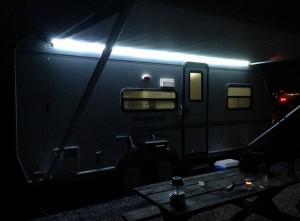 There are two ways you can mount these RV awning lights depending on what you like best. They can be mounted up at the top of the awning, right underneath the sidewall awning rail, or they can be inserted in the awning tube and roll up inside the fabric when the awning is retracted. Either way this can be a permanent installation that can be enjoyed each time you use your awning at night.
 I like that the strips can be trimmed to fit custom lengths, and the 3M adhesive backing keeps the lights secure when the awning is closed. The wireless remote control adds convenience with its dimmer feature and handy key chain clip, and it functions up to 125′ from the unit. With seven vibrant colors all in one strip, you can program it to fade or step between colors (white, blue, pink, red, yellow, green and cyan).

 RV Park Jobs: The Best Way to Get Started!
 But, before you go be sure you have thought it through and are not just acting out of frustration stirred up by an incident that will probably blow over. We have not had an issue like that, but we have had friends that just no matter how hard they tried they just always seemed to blow everything out of proportion.













 I think you can tell which one we prefer! But check them all out and see which works best for your camping needs! You may find having a few memberships is a good mix to meet your RV campground needs.


Recent Comments