Baroo! Hello again to all my furry and human followers. Lindsey the full time RV living Corgi here with my latest and greatest Bark Report. Mom has been seeing lots of stuff on human Face Book about RV Slide Out Problems. Since I hear Mom and Dad talking about these issues I thought I would share my four-legged perspective on some of these issues.
Did you know that there are a few different kinds of slide out rooms on RVs? Well if not, I can tell you there most certainly are. (Dad’s a big help here since he examines these rooms during the RV inspections that he does.) The slide rooms can be cable, hydraulic, electric drive, or something called Schwintek. Each can have their own set of problems.
Common to all these rooms is overloading them. When you get too much stuff (or fat corgi’s) on them, they have to work harder to move in and out. Or maybe they won’t work at all. We did that once in one of our first RV trips. Dad had to go outside and push on the slide out to help it come back in.
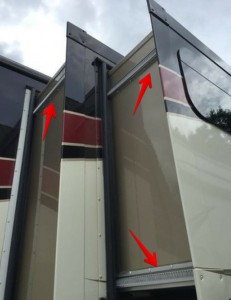
If slide outs are overloaded they may not come in evenly. Thus, you might see that the top is flush with the RV and the bottom is out a couple inches or so. We’ve have seen RVs going down the road like that. Not good!
You know those really big buses that have the heat running through the floor? True story. One guy had so many people in his RV for his seminar business that it bent the slide rails for the full side slide out room. Basically, he had too many people sitting on the couch and in the dinette area. Not only that but due to excess weight in the RV, the heating system running underneath the tile floor was damaged. He had to have the slide out rails and flooring repaired!
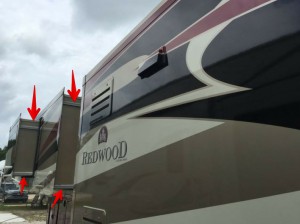
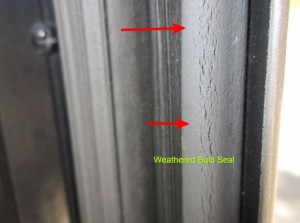
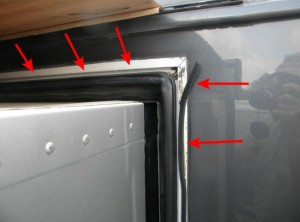
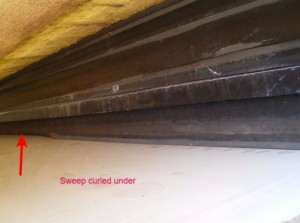
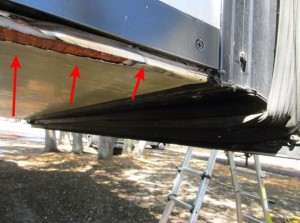
All these slide rooms have this big rubber seal around them. Dad says they are called bulbs (not tulip!) and sweeps. They are supposed to be right against the RV sidewall to keep water and bugs out. Proper maintenance on them is needed so they can do their job. 303 Aerospace Protectant is really good for this application!
Sometimes a slide room can get out of alignment. If you drive your RV, it will happen. All those rough roads and the twisting of the frame, or sometimes even extending them without the jacks down. Each RV manufacturer will recommend how it should be done on their RVs. One cool Tech man showed Dad how to adjust ours when we had that big fifth wheel. And he had to do it several times. Easy-Peasy.
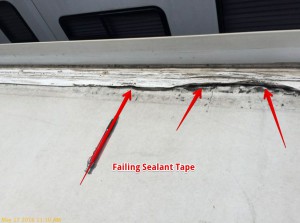
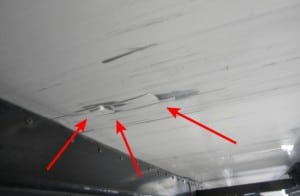
Next are the slide room roof and seams. Mate, you need to keep those maintained as well! Check the sealant around all the seams and edges to be sure to keep that water out. This corgi is not a fan of water, especially inside. Water comes in and then you can get that nasty black stuff growing.
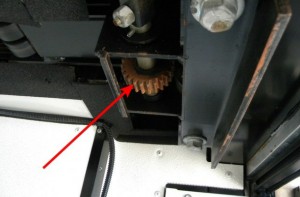
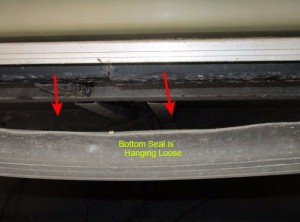
Be sure to check the underside of your slide rooms too: be sure there is no rust on the screw drive that could be impairing its operation, none of the electrical cables are hanging up on anything, the seals are in good condition, and that no rollers are missing.
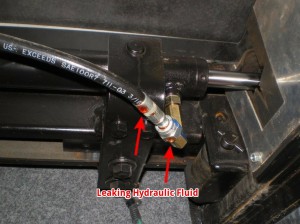
If the slides are hydraulic, it is a good idea to keep an eye on the hydraulic fluid supply in the fluid reservoir tank! Also, keep an eye out for leaks!
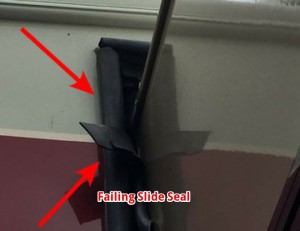
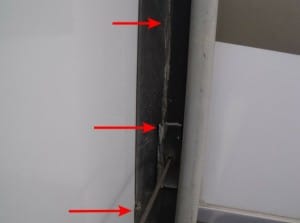
On the cable type slides (you will know these by the two cable wires top and bottom on each side of the slide room), after a period of time, the cables can tear the rubber seal. Be sure to keep an eye on that too.
There is also a slide system called Schwintek, the one that has the bars on each side of the room at the top and bottom. We have these on our full time living RV!
Okay, another true story. You know those RVs with the slide room in the rear of the RV? On this one RV, when this slide room extended, it just kept going and going and going! Literally. Like the Energizer Bunny.
It was a Schwintek slide system that is supposed to stop when it feels resistance from the RV sidewall. Well, the rear cap joints were not sealed, water got in and rotted the wood. The slide out wound up falling out the back of the RV! Talk about a room with a view. The lesson here, always be checking your sealant and seals around your slide rooms.
So you get to your campsite, push the button for your slide room and nothing happens. Hmmm you say. Now what? Lots of the motorized RVs require the emergency brake to be on to extend or retract the slide outs. Some may even require that the seats be moved forward.
If your slide out rooms are not functioning it may also be a good idea to check your batteries. If the house battery got shut off or there is not enough voltage, they won’t work. And still other RV’s may require that the jacks be down before the slide outs will operate. Get to know your RV. It will save you from some frustrating moments!
When retracting your slide rooms, be sure to check that nothing is in the way of the room as it comes in. You could rip off a seat, get something stuck underneath which could damage the rollers, break something, or rip off a cabinet door. Always use your slide room locks when traveling if they have manual ones. Slide outs can work their way out as you drive if they are not secure.
Same goes for extending them, if you have slide room locks. Make sure they are released. If not and you try to slide out the room, you could seriously damage your side wall. Oh and check outside for enough clearance as well. Nothing worse than extending right into a tree, a post, a bin door, or your significant other.
Okay, it is time for me to sign off and sign out and catch some zzz’s. Until next time….
Depending on where you are in the country it either still feels like winter or perhaps like summer! The weather in the United States has been a bit goofy so far this year!
Since our last full time RV living Winter update, Pam and I finished up our series of teaching RV inspector training classes at Lazydays campground in Seffner, FL. Since then we have been visiting different RV parks around Florida and sharing our thoughts about them on rvparkreviews.com.
We have also been doing RV inspections and trying to fill in the gaps for inspections as calls come into our toll-free number. Some inspection locations we have been able to travel to and help out and others were just not feasible given the clients location relative to ours.
Last summer we traveled the northeast of the United States teaching in different locations. We had a great time doing that, but this summer we are going to stay in Florida as we need to be near aging parents who are going to have needs, very soon, I am afraid to say. We all have to deal with these situations sooner or later!
Having spent many years in Florida we have discovered that the best place to be in the summer months is the Florida panhandle. The beaches are beautiful and if you are in close proximity to the beach, it tends to be cooler as the gulf breezes off the water help out.
So, we are situated in a very nice RV park that is just a mile from the beach as the crow flies. The area we are in tends to be busy this time of year as everyone from Alabama and Georgia come south to spend some time at the beach. It is affectionately known here as the Red-Neck Riviera!
However, the beaches are some of the best in the world with the white sand and turquoise water!
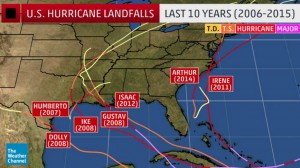
Living in Florida during the summer months, one can’t help but wonder when the next hurricane will strike the state! We are now outside of the ten year record setting season of 2004 and 2005! Wilma was the strongest storm to hit Florida as a strong category three hurricane.
For the 2016 hurricane season, the prediction is for there to be fourteen named storms of which eight will be hurricanes and three of those will be major storms. The prediction is for this to be the most active season since 2012. Here in Florida that year we had one close call but not a major hurricane landfall.
The Caribbean and the Gulf of Mexico look suspect this year according to weather.com and the weather underground!
The average is for a major hurricane to strike Florida every seven years. Given that statistic we are overdue! That is why we like the panhandle of Florida as opposed to being down in the peninsula. At least we can head in a one hundred and eighty-degree direction in order to avoid a serious storm.
Pam and I have spent a night in our full time RV living 5th wheel during a tropical storm. I can tell you that is something we never want to repeat, and that was only sixty-five to seventy-five mile per hour winds! These storms are not to be messed with! When we are told to get out, we do! So far we have evacuated for two storms. That one storm I mentioned earlier formed so fast we could not get out. We just had to hunker down and ride it out.
So, if this is going to be an active hurricane season we will be prepared!
As we travel to different parts of the country we always keep aware of possible weather issues. In the midwest tornados can pop up at any time. The first thing we ask when checking into a campground is what to do if that tornado siren goes off?
These are just things you have to do when you are living the full time RV lifestyle!
I have to laugh! Pam and I are sitting here watching Go RVing on the Travel Channel. There are two thirty-somethings who have been on the road for eleven months in a class C RV that is bigger than ours. They are looking for a new RV with more space and a formal dining room. What a laugh! I think that is called a house!
She is in a new forty-five foot long 5th wheel toy hauler RV saying, “oh I really like the ceiling fan!” What? Is that really that important? What about the truck you will need to pull it? What about driving that sixty-foot behemoth that you have never driven before? What about all the other important mechanical items that really matter when it comes to full time RV living? Should you really care about the curtains and the ceiling fan?
I wish RV salesman would have some integrity and bring up the issues that would really help their clients! I hate to see people being mislead just so some salesman can make his commission! Purchasing the right RV for full time RV living is a major decision and that choice can either lead to a long and enjoyable full time RVing experience or send people back to the sticks and bricks!
That just my opinion anyway! It’s my website so I can express it now and then!
What do you think? What changes would you like to see made in the RV sales and buying experience? Perhaps if we get enough feedback I can get the word out to the dealerships so things can get better!
Please feel free to express your thoughts below! We look forward to hearing from you!
One thing is for sure when purchasing an RV; you need to do your homework! If you are unsure of what you are getting yourself into, please seek the assistance of a professional!
What I would like to share in this post is a few stories about RV buyers that have been saved from purchasing a money pit because they took the time to slow down the sales process and seek some help in evaluating the RV they were interested in purchasing.
Most people who purchase an RV start out an RV show or at a dealership. This is mainly because there is a large selection of RV’s available to look at. This is a good place to start an RV search for either a new or used RV. But you have to know what you want in an RV, or you may get a good salesperson who will get you excited about something that may not be what you want.
I am an advocate of purchasing a used RV over a new one for two reasons. First, let someone else take the hit for the first two years of depreciation!
The second is, if you buy an RV that is two years old or older, you will save yourself the headaches that come from the issues that commonly need to be repaired because of factory mistakes. Our friends who have purchased new RV’s have had issues up to two years after their purchase.
You can even find a good used RV that can be ten years old or older!
The thing to keep in mind when purchasing these used units is to realize that there is a great need to have a professional review the overall condition of the RV. Then all the RV’s essential systems can be evaluated for proper function. I have discussed a list of recommended items to be checked in another post on this website.
RV Horror Stories
As an RV inspector, I have seen some very unusual situations that have come up during the inspection process! Because my clients had the foresight to seek out the counsel of someone more knowledgeable about RV’s, they were able to avoid buying a money pit!
The internet has become a very popular way for people to find an RV! They can be found nearby or in another state. We have clients who contact us and ask us to inspect the RV prior to them making a trip to see it themselves. This can save them lots of time and money because the RV they see online is not always in the same condition when viewed in person.
Whether the RV is at a dealership or it is a private sale, the photos shown online never tell the whole story. We saw this recently for a private seller.
The potential new owner found the RV online and contacted to have an inspection done on the RV. Most of the RV systems were in working order, but what was not obvious to the untrained eye was an area of water intrusion that was hiding behind some cabinets. It all stemmed from a roof penetration that could have been easily missed if not for the inspection process!
These are the kinds of issues that will lead to damage to the RV and repairs will cost in the thousands of dollars to repair! Would it not be better to know this before the sale as opposed to after?
Another client was interested in a class A diesel motorhome that was the make and manufacturer that he preferred. He did his research, found it out if state and through an online source. It had the chassis and engine type he wanted, according to the manufacturer specs. He made the wise move to order a third-party unbiased inspection of the RV. He also ordered fluid analysis to be performed on the motorized components of the RV.
The inspection was done as ordered and in addition to the RV being completely modified from the roof to the interior, the Cummins engine that he wanted turned out to be a Caterpillar! Had he known that ahead of time he would have never even considered the RV! But, he was delighted with the outcome of the inspection because from all that was uncovered it saved him tens of thousands of dollars in not buying a mistake!
Another client found a two-year-old unit that was parked in Florida in an RV garage home. Again, it was only two years old and apparently garaged its entire life, other than when traveled in. The potential buyer ordered premier level inspection on the unit including fluid analysis on the engine, transmission, and the generator.
The seller was not pleased that an inspection was being performed on his pristine unit, even though he wanted to get it sold. He questioned about why is the buyer inspecting this beautiful unit! There was nothing wrong with it, according to the seller!
On the day of the inspection, a leak was noted underneath in the bin area under the kitchen. It was dark in the garage, so the unit was moved out into the driveway where more light was available to check the chassis and undercarriage visually.
Now, the onboard water pump was left on during this moving process. Once the RV was started up and pulled out into the driveway, water started gushing out of the storage bay under the kitchen. It was quickly observed and the water pump was shut off!
Now, what if the inspection was never ordered and the RV was purchased and somewhere down the road, during a trip, that happened?
The client was still interested in purchasing this particular RV but only after the leak between the interior flooring and the storage bays was fixed! The estimated cost of the repairs was in the thousands of dollars due to the tile flooring in the RV.
These are just a few of the kinds of things we see when RV buyers order a pre-purchase inspection.
Are you looking to purchase a used RV? Do you want me to help you so that you don’t wind up buying a money pit, or even worse, an RV that you did not want?
You can contact us, and we will coach you through the process!
If you would like to tackle a full-blown RV inspection on your own, check out my discussion at this link. If you are a do-it-yourself kind of person, you may have the skills to save time and money by following my advice! I have trained over 1,300 people to be RV inspectors since 2010.
When it comes to budgeting for the full time and part time RV lifestyle, applying methods that lower the average RV park fees can add up the savings over the course of a year!
Pam and I use multiple methods to cut our average RV park fees, and we would like to share some of those with you. These savings come by searching out RV parks that offer online discounts, using camping clubs, and by boondocking at various locations to save on RV park fees.
$20 Average RV Park Fees for Us!
We spent the first three months of 2016 in Florida. Now, anyone who has spent any time in an RV in Florida, in the winter, knows that RV site fees can be expensive. Why? Supply and demand! Everyone wants to come here to escape the cold in the north.
That means that finding an RV site for a three month period can be nearly impossible if you want to be south of Tampa. When you call an RV park for a February stay, you may get laughed at! Some of you may have experienced this yourself. In fact, Pam has been on the other end of the office phone in several RV parks and had to tell potential RV park visitors the bad news!
So how did we just average $20 per night staying in Florida RV parks in the busiest months of the year?
The first thing is we don’t stay in the same place for months on end. We have in the past, and depending on the park, the nightly rate can wind up averaging more than twenty dollars a night by the time you pay taxes and electric usage!
Since we are so mobile, and it requires little effort to move about, we find that Florida RV parks always keep transient sites available for folks like us. And you know the good thing? They offer deals for those RV spaces!
Since January, most of the places we have stayed offered a $99 a week rate. You can stay for one week and come back the next month and use the discount again. One park told us if we came in the last week of the month, we could stay two weeks at the $99 per week rate.
How did we find these parks you ask? We started the year off at the Tampa RV Supershow. We find that many of the Florida campground owners attend the show as vendors, and they offer specials to get transient visitors to their parks. Pam collected all kinds of information on these places and then researched them online to see if they would suit our needs. Then we use rvparkreviews.com to get the real story on RV Parks and campgrounds.
Now, because I have a monthly engagement at Lazydays to teach an RV inspector class, I do have to be mobile. When we spend a week there, the nightly rate is close to fifty dollars a night! So how do we knock that down to bring our average RV park fees to the twenty dollars range? We boondock! This is the act of parking in approved areas that do not provide RV services: water, sewer, or electric hookups.
There are great free places to stay! You just have to research and find them!
What we found worked great this past three months is that after leaving Lazydays, and we had three weeks before having to return to the next class, we boondocked a total of seven days. We then spent the other two weeks in RV parks that were offering winter deals!
We also use our Passport America discount club card to get fifty percent off nightly RV park fees. Most of the RV parks in Florida that offer these deals are limited in the months of January, February, and March! Deal hunting requires a lot of research at the Passport America website. You have to find what days of the week RV parks are offering discounts and what the black-out dates are.
Some will not even offer the Passport America discount during the Florida winter season! But others will offer unlimited stays using the fifty percent discount.
We stayed at one of these RV parks in February. They offered an RV site for $17.50 per night. It was a nice park, old, but nice. I think the main reason for offering the discount in February is that the park is located right next to railroad tracks, and a double line of them. All day long, and in the early and late hours, trains come through.
We knew this was the case because we read reviews about the RV park and that some people could not tolerate the train traffic. What we did was to ask for a spot in the corner of the park furthest from the train tracks. The owner was able to accommodate our request. We stayed for a week, and the train noise was not too bad!
Being able to save money on your average RV park fees, if that kind of thing matters to you, all boils down to being flexible. If you don’t care too much about your exact location, and you are willing to move about, there is money to be saved and nice places to visit while doing so!
If you want to check in below and leave a comment, please feel free to share your experiences!
Baroo! Welcome to all my furry and non-furry followers. Lindsey here with my latest Bark Report.
This time, I am going to Bark at you all about RV Newbie Tips. Mom and Dad get lots of questions from people who have never had an RV, and I want to help them out because they are so busy trying to help fellow RVers!
Everyone seems to make the same mistakes even when warned by veterans. Dad says sometimes it’s just a learn by doing, but other times you can avoid some expensive mistakes if you take heed of a few of these tips.
RV Newbie Tips
The first thing that is super important is to know you can’t drive your RV like a car. You have to remember that it is a really big thing that is not a sports car. It takes longer to speed up, longer to stop, you have to take corners slower and sometimes wider, and watch the potholes and railroad tracks.
Dad has been surprised by some railroad crossings. I thought I was going to lose my choppers from the tooth-jarring experience. Scared me barkless with the sudden rattling of everything inside.
Hey, watch the driveway aprons when entering parking lots. Some of them can be quite abrupt. It is best to try to take it at an angle to avoid scraping (technical term, bottoming out) the hitch or rear of your RV. It can bend the hitch pin if too severe or damage the undercarriage.
I need to remind you to be kind and not to cut off someone on the road either. It’s just not nice. Gives RVers a bad rap. Not only that but you could cause an accident if you cut them off too close. You’re in an RV for the adventure.
Slow down and take the time to check out the scenery. To be a nice RVer, when traveling on single lane roads, if you can, pull over somewhere to let traffic pass. The locals will think better of you.
The next thing is your stuff. Just because you have lots of storage places doesn’t mean you can fill everything up to max. By manufacture specs, they tell you how much weight you can carry. Don’t exceed it. It can cause tire failure among other things. (See Dad’s cool articles on tire safety.) Been there, done that, not good.
Your RV is not your sticks and bricks. You just can’t take everything with you, be it to live full time or even on vacation in your RV. Pack only what you need for the vacation. Your entire wardrobe or kitchen doesn’t need to come with you on vacation.
I love Dad’s favorite saying. He calls it an “RVR,” Repair Vehicle Regularly. BOL! If you drive it, it’s going to need repair. Even if you just let it sit somewhere, it will require fixing at some point. Mom says it’s like a mini earthquake rolling down the road.
We had things in our Fifth Wheel that just disappeared after one trip, never to be found again. Towables seem to get more of that action going on back there than a motorized. At least with a drive one you can listen to it or see it as it happens.
Next, on the hit parade, I want to bark at is cleaning. You may think that you are uber clean, but I’m here to tell you it’s not enough. No matter how clean you think it is, your RV will still require constant cleaning. A clean RV equals less chance of those disgusting, nasty bugs to find their way in.
Plus, remember you are constantly going in and out in all different places (sand, grass, leaves, water) which will come in on your feet. Mom is constantly sanitizing the kitchen and floor for any bits of food or crumbs that I happen to miss on the floor. She even wipes my puppy paws every time I come in. Gees!
Big DON’T is dumping food down your sinks. It all ends up in your tank which can cause a whole bunch of problems, foremost messing up tank sensors. It’s hard enough to get them to read accurately without dumping grease and food down there. Go easy on the toilet paper. Count to 10 every time you flush and use septic safe brands.
TP likes to stick to the walls of the black tank or clog it. You could get a nice poo pile in your black tank. Dad adds this new green stuff that got our black tank sensors working again! Check out Dad’s article about a great flush out your black tank!
Mom loves paper towels. She wipes everything down before washing dishes. And easy does it on the dish soap. You waste a lot of water if you have to constantly rinse the sink out to get the “bubble bath” down the drain. Clue. If it bubbles back into the other sink before going down, too much. If Boondocking, all that rinsing is water from your fresh tank.
Next, I want to bark at you about is noise. (Hey, Dad, I get it! He says I bark all the time. Corgi on duty!) Keep it at a reasonable level. RV walls are thin. If you can hear people outside, they can hear you inside.
Which brings up another point. Don’t arrive late. Those big old noisy diesel engines with their beep, beep, beep back up sound does not make for a good neighbor. Plus it’s harder for you to get situated in your site without incident. And you don’t want an incident, especially after dark.
Do you all realize that RVs have something called a Power Booster button? This needs to be on to receive over the air channels. Remember to also choose TV ANT (or Cable) on the box. Scan your TVs at each campground -option typically found on your remote menu button.
Dad loves the Jack antenna they are now using on RVs. It has lights that tell you where the best signal is for your antenna before you scan. We had replaced our batwing one with one of these bad boys when we had our other RV. GRRRR-ate!
Before I bark off, make sure you are level on your site for your RV Refrigerator. If the gunk (that’s a technical term) in the coils can’t flow, it can cause overheating and major problems, if not now, down the road. (Get it, down the road?! I do crack me up sometimes.)
So on that note, time to catch my daily snap. As always, any questions, or if I’ve missed anything, Bark at me below. Until next time,
In parts one and two of the importance of RV tire maintenance, I discussed air pressure based on actual RV loading, regular visual inspections of your RV tires, tire pressure monitor systems, what to do with RV tires that are stored or sit static for months during full time RV living or storage, DOT codes on tires, and a discussion on when to replace RV tires.
In part three of this article, I will address tire dressings, possible causes of abnormal tire wear and selecting replacement tires for your RV.
Applying RV Tire Dressings
There are many opinions about what to apply and what not to when it comes to tire dressings! Most people seem to like to have their RV tires shine. Sure, it looks good but most of the products people apply, including RV dealerships, only appear to attract dust and dirt.
I have done lots of research on this topic! I had Michelin XRV tires on my Freightliner medium-duty truck. I checked with Michelin, and they sold a product that was water-based and contained no petroleum distillates or alcohol. These seem to be the big offending ingredients in tire dressing products!
The product Michelin used to put their name on was 3-in-1 Tire Shine. I bought a few bottles, and it did a good job of keeping the tires black, but not shiny! It was a water-based UV protector. For some reason, they stopped making it.
When I needed more of that product and found out that Michelin no longer sold it, I did get a tire dealer to tell me that 303 Aerospace protectant was a close formulation to the Tire Shine.
I am a believer of applying something to tires to aid in the UV protection. I used the Michelin Tire Shine and then the 303Protectant on my Michelin XRV tires for six years. Those tires had no sidewall checking and looked as good as the day I bought them when I traded the truck. They could probably have been used for a few more years according to the Michelin tire specialists.
When my current Michelin and Chinese trailer tires start to get that brownish color to them, I apply the 303 Protectant, and it brings back the black color to the sidewalls. They do not have a shiny finish to them, just a deep black color! And, it does last for a while. I usually clean and apply this product to my tires once a month. We do move our RV frequently, so that helps out as well.
Abnormal Tire Wear
RV tires, if maintained with the correct tire pressure for the measured load, should normally wear with even tread wear. Of course, tire rotation, if recommended by the RV manufacturer can also help to assure even wear.
If abnormalities start to show up in your RV tires wear pattern it might be necessary to check with the motorhome chassis manufacturer for alignment specs that could assist a certified tire dealership in correcting possible issues.
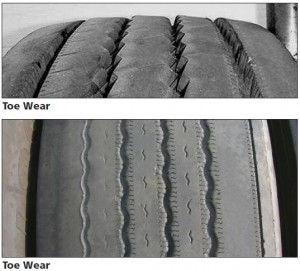
According to Michelin, a feathered wear pattern on the front tires typical indicates misalignment (toe-in or toe-out) Sometimes a radial tire will not have this wear pattern unless the toe condition is severe. Instead of the feathered edge wear, the tire will be worn on the inside or outside shoulder, which could be confused with camber wear.
On a three-axle RV, a skewed rear axle and tag could cause feathered edge wear on one shoulder of one front tire and feathered edge on the opposite shoulder of the other front tire. To correctly diagnose a tire wear condition, the motorhome should have the alignment checked on all wheel positions.
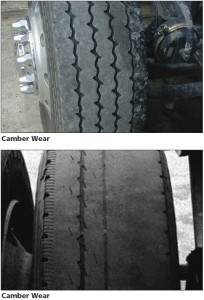
Michelin also refers to camber wear, also known as edge wear, which wear shows up on the inside or outside shoulders of the tread. Wear on the inside edge of both tires may be due to negative camber or toe-out, a misalignment. If only one tire shows edge wear, check for worn kingpin bushings, bent or worn steering components, or excessive positive camber. For solid beam axles, excessive camber can result from axle overload.
Michelin publishes that if correct pressure and proper alignment are both continually maintained, tire rotation may never be needed. However, in other cases, tire rotation may be needed to help even out wear patterns caused by alignment, underinflation, or free-rolling wear problems.
Selecting Replacement RV Tires
The most important decision an RV owner can make is the replacement of its tires when they are beyond their useful life. The replacement tire decision can be because of the tires age or that the tread is worn off. Remember that I stated earlier that the National Transportation and Safety Board recently stated that tires that are six years old should be replaced.
Of course, it is best to consult a certified tire specialist when it comes to RV tires!
The best way to replace RV tires is to match them with what the RV came with. The original tires were matched with the RV for load rating, tire diameter, speed rating and the width of the tire. A major consideration for dual axles is the tire width. If an incorrect tire is chosen, the dual spacing could cause the tires to kiss during travel. This can weaken the tire sidewall over time.
Also, choosing a tire with a higher load rating and increased tire pressure might sound like a good idea! But, is the rim the tire will be mounted on able to handle the increased pressure? It is best to consult a professional when making changes to the original tires that the RV was designed to be driven with.
In conclusion, please don’t neglect your RV’s tires! A little regular maintenance and checking of tire pressure before travel can assure that you will not be delayed reaching your destination due to tire a related issue!
Here’s wishing you trouble-free RV travels now that you are armed with some tire safety knowledge!
Baroo! Hello, my human and furry followers. Lindsey here with my Bark Report. Today I want to bark at you about inspecting a used RV. I got to go with mom and dad on an inspection. A real NRVIA, third party unbiased inspection. Ha! And Dad thinks I don’t listen! WRONG! And I’m here to tell you all about it first paw.
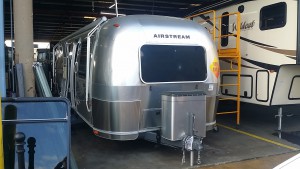
Dude, it was so Corgi cool to watch mom and dad at work. I lost a whole day’s worth of sleep trying to see all that they were doing. It was at this huge place that sells all kinds of sizes and shapes of RVs. We got a special place to work in, one of those covered garage spaces. It was noisy for my big ears but so exciting! I kept going from window to window to try to see what was going on outside.
Let me tell you; my dad could be a superhero. He was like Spiderman moving all around it. The RV was all shiny and silver, like a bullet. He examined every inch of that thing. He moved the ladder so many times I lost count on my puppy paws. (I only have four toes on my front paws because my dew claws were removed when I was a baby. Ouch! You try losing a thumb.
Dad tested for all kinds of things. He tested to make sure the new owners won’t get shocked when they touch the door or anything on the RV. He checked the big rubber round things that let the RV move down the road; He checked the big cloth covering thing over the door to be sure it worked, and even inside every hidey-hole on the outside.
He checked all the white sealant stuff on the roof around the things sticking out of the roof, or where seams come together for places where water could get inside. Believe me; you don’t want that. We had that once, and I’m here to tell you I don’t like unexpected showers at three in the morning.
Then Dad checked that the battery things worked and all the electrical stuff was not burned or damaged and working as it should be. He even got to play with the poo valves. I always wondered when Mom and Dad pull on them, does it make the poo flow faster?
Meanwhile, Mom was inside checking all the stuff in there; cabinets, beds, windows, lights, fans, toilets, sinks, those sensor things on the ceiling, the walls, floors, and ceilings for soft spots or damage. She even tested the stove and refrigerator. I was sure we were going to have lunch. Drat. No such luck. She just kept going, like the Energizer Bunny.
After Dad was done outside, he went inside to check on that stinky gas stuff in those tanks used in RVs. He wanted to make sure that it wasn’t leaking. That would be really bad. Mom told me once that if it leaks, it could make people sick or even blow up the RV! That could really ruin your day!
Through my vantage point, I saw him sticking these probe things in the ceiling vents like we have in ours that blow cool air. He told me later he was checking to be sure they were working so the new owners would stay cool in summer. Good idea!
The people that asked Dad to check out this RV are new RVers. They never had one before and wanted to make sure that this one would be a good one for them. Not good just because the salesman told them so. As Dad says, he wants them to have a good experience and know exactly what they are getting by not buying a money pit. Wow! That is so cool! I am so proud of Mom and Dad to be able to help people like them out.
We have people ask Pam and I, “why would you want to live in such a small RV? Are you crazy?”
So, I thought it was time for a small RV living full time update! Since we just celebrated our first year in our second full time RV living RV, and in our eighth year of enjoying the lifestyle, I want to share some thoughts on what it is like to live each day in one hundred and sixty square feet.
As I mentioned earlier, since trading our monster 5th wheel and medium duty truck for something smaller, we have traveled in our class C RV almost eight thousand miles and lived in it for three hundred and eighty days.
We lived and traveled in our 5th wheel for over seven years. We enjoyed the comfort and residential amenities of the 5th wheel, but when it came to moving it, that was sometimes not as much of an enjoyable experience. It was basically like driving a semi-truck!
When it came time to adopt a more mobile lifestyle due to our RV inspection business, we decided that a smaller motorized RV would suit us better. It may sound strange to say, but we felt that our 5th wheel was just too big and that we did not need all that room, except to store our stuff. So, we just got rid of the stuff and went for small RV living!
Small RV Living Full Time
Let’s see if I can give you an idea of what a day in a small RV is like!
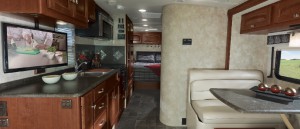
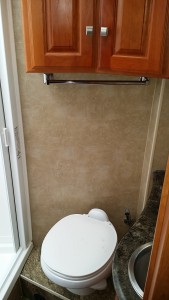
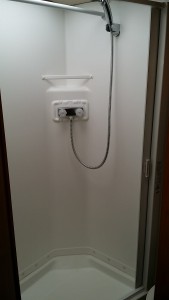
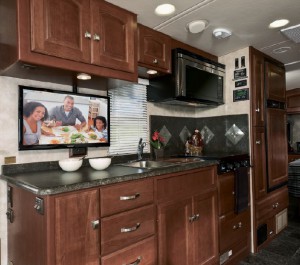
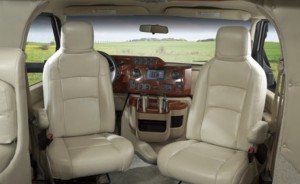
Like most RV’s, we have a kitchen, a dinette, two front chairs that spin around to service the main living area, a small bathroom with sink, toilet and shower, and a bedroom with a queen bed. Basically, everything you need to be comfortable no matter where you are!
The RV has two slide-out units that add space in the bedroom and living area, but even when retracted the unit is still comfortable. We don’t always extend them when boondocking at Walmarts. We don’t want to appear like we are staying long-term!
A Typical Day Spent in the RV
If Pam and I are not traveling to do an RV Inspection or teaching a class, we typically spend the day inside working inside the RV. In addition to growing our RV Inspection business, I also administrate this full time RV living website. As it continues to grow it does take work in responding to people’s questions, monitoring the pages and posts on the site, and writing additional content. I enjoy hearing from others looking to adopt the lifestyle and helping out as I have time!
A typical day starts out with Pam getting out of bed first and taking care of Lindsey, our authoring Corgi, and getting the coffee made. I stay out of the way and check the morning communications via my smartphone. I find this works best, so we are not competing for the same space.
Once Lindsey goes out for her morning constitutional, I move from the bedroom to the main living area to do what I need to do. After the morning green drink and some bathroom activities, I head for the coffee pot and then to the laptop to start my day of work. Now, not every day is a full work day. If so there would be no reason to live in an RV! The fun of the lifestyle is to move about and enjoy the sites of many different locations.
My desk is the dinette area. This area is also where we eat and where we sit and watch TV. The TV is mounted on the curbside kitchen wall. It does pivot out so we can sit in the front chairs and watch from there, but we seem to prefer the dinette area. Lindsey has adopted the drivers chair as hers.
When the street-side slideout is extended, there is plenty of room for Pam and me to navigate around each other. We very rarely feel like we are in each others way! With the slides retracted for travel and boondocking, that can be a bit more of a challenge.
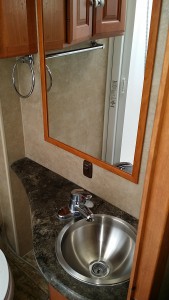
We find the bathroom is plenty adequate for us. The shower could be a little bit larger, but for a thirty-foot RV, it is what you get. At first, we felt the bathroom sink was small, but we have had no problem with its use. Our black and gray tanks are thirty-four and thirty-one gallons respectively.
The black tank can last us a week or so, but the gray tank requires dumping every other day or so depending on showering, etc. We can easily boondock for two or three days if we are conservative on the fresh water usage of the forty gallon tank.
Meals are not a problem! We can cook most anything we want and have the space to handle the prep work. We are not making elaborate meals. We enjoy salads, chicken and vegetable meals, and skillet dinners, etc. Dinners could be the most challenging in this type of RV, but our simple meals pose no problem! With the large micro/convection oven, and the 3-burner gas cooktop, cooking is easy!
Our seating arrangements consist of the driver and co-pilot chairs and the dinette seating. I miss the euro chair that I had in the 5th wheel, but then I don’t miss some of the other things I had to deal with in the 5th wheel that I don’t with this RV! If I desire to recline somewhere, I have pillows at the dinette, and I lie across the bench seating and can rest my feet on a folding table if I want to.
The bedroom has plenty of storage for our clothes, and the bed is large enough to work for us. Lindsay makes her way to the bed each evening to keep us safe – attack Corgi on duty! With those ears, she hears everything. Sometimes she hears too much!!
So, working at the dinette area, perhaps an afternoon walk, meals, evening TV viewing while doing a little more computer work, and that’s the day! The commute from the bedroom to the dinette is pretty rough to take some days! LOL Even on the days we are working outside the RV, we take it with us as our mobile office. That’s the beauty of this size RV!
Could you possibly see yourself enjoying small RV living? That really depends on the lifestyle you are used to. Pam and I migrated from a thirty-eight hundred square foot house to a twelve hundred square foot home to a four hundred square foot RV to what we have now.
For us, it was a progression. Could we have jumped from the large house to our current RV? Probably not! Everyone’s journey will be different, but yes you can enjoy full time RV living in a small RV! It just takes planning and the research to know what you are getting into before buying one.
If you think you want to try it, rent one. Small RV’s are easy to rent! This would be an excellent way to test it out!
If you are enjoying full time RV living, or you have more questions about this subject, please feel free to comment below!
One of the most popular posts on my website is the one that talks about the best 5th wheel RV for you. That proves to me that selecting an RV to buy is a difficult choice, especially if the person making the choice has never traveled in an RV before!
There are many determinations to make when selecting an RV to purchase! That decision can be entirely different if the RV is being used for full time RV living or it is just for occasional travel. But, in either case, there is not a more comfortable way to travel! When on the road in an RV you have everything you need! Where ever you are, you are at home because everything you need is with you!
What I want to address in this writing is to give you things to consider when starting your research for an RV you may be considering buying.
It amazes me that 1.3 million Americans live in an RV and are enjoying full-time RV living! The question is, did most of these folks make the right choice when they made their first RV purchase?
My research has led me to answer no to that question! Many people we have met in our eight years on the road have shared how many RV’s they have had since they started the lifestyle. Most people have traded their RV every one to two years.
They also admit that they have made impulsive purchases. They were attracted to mundane features that had no real significance for what they really needed for their RVing lifestyle! They bought in the moment instead of thinking the RV purchase through!
RV dealerships prey on emotions to get you to buy at the moment! Statements like, “Oh look how lovely this fireplace will be on a chilly night! You can enjoy watching your flat screen TV and have a fire too!” What they don’t really know is how you are going to use the RV and what your actual needs may be!
There are some dealerships that will take the time to learn your needs and match them with the appropriate RV. But, when you first start looking you may not know exactly what you will need in an RV purchase.
Selecting an RV!
What should you be looking for? These could be some things to consider:
What amount of engine power will you need?
What class of RV will work best?
Will my choice be easy to drive?
Does paint quality matter to you?
What floorplan will work best?
What about features and technology?
Will you have enough storage space?
Can you carry everything you want with you?
What is cargo carrying capacity?
Should I buy a new or used RV?
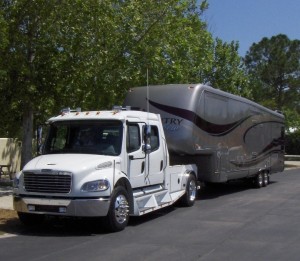
Will you need to tow a car or a trailer? How does that affect your RV chassis choice?
If purchasing a towable RV, how much truck will you need to safely pull the RV?
So, those items I listed above are just a few of the considerations you need to make when selecting an RV to purchase. But first, it really does not matter what you may think you want if you can’t afford it, right?
So the first thing is to set a realistic budget. Will you pay cash for your RV or will you be financing a significant portion of the purchase? You must decide so when you go shopping on the internet, or at an RV dealership, you are working within your budget.
Once you have that number, keep it to yourself! A salesman’s first question is “what is your budget?” There are many ways they can make the numbers work! Payments can be spread out over twenty years.
But will you still have that RV in twenty years? If you trade it in after just a few years you will be upside down: owe more than it’s worth. Choose the class of RV that you are considering and share that with them.
For example, when the salesperson asks, “what budget have you set for your RV purchase,” respond with something like, “we are looking for a class A gas powered RV in the thirty-six-foot range.”
It will be best if you choose a class of RV before going to the dealership. This will be part of your pre-visit research. Don’t buy on the first visit! Go home and evaluate what you saw. Take lots of pictures!
If after looking at the RV of your choice you decide that it may not work for you then you have spared yourself from making a mistake! Just re-examine your priorities and try again.
RV’s are a depreciating asset. They are not even an asset! Once you drive it off the lot, especially if it is brand new, if you turn around and come back a week later, it is now a used RV.
That is why it is so important to buy right, the first time, and you can do this by spending a lot of time reading, visiting dealerships, and talking to others who are already on the road.
I want to address some of the items to consider when purchasing an RV that I listed earlier by telling our story and process of how we were able to buy and keep our first RV for almost seven years!
The best thing Pam and I did was to rent RV’s for seven years before deciding to get into the full-time RV lifestyle! We were at the point that a vacation in an RV was far better than other options we had done previously! Once we were out on the road, we learned so much about what we would like in an RV of our own and what we would not.
Once we finally decided to start looking for the class of RV we had decided on, I researched my choice vigorously! I set a budget and decided a used RV that was in the two to the three-year-old category would suit us best.
My determination was mostly based on an RV manufacturer that I thought had great quality. We also based our choice on one that we had rented from this particular RV manufacturer and the feedback of other owners.
I found the one I wanted, and it was only a couple of hundred miles away, so we went to look at it, and with our purchasing budget in mind.
It was just what we were looking for but about twenty-five thousand dollars more than I wanted to spend for it. So we thought perhaps we should go a few years older, but the same make and model, if we could find it.
As chance would have it, a few weeks later the dealership was having a close-out sale and the price of the RV we looked at had dropped twenty-five thousand dollars. The RV price was now right where we wanted it: two years old, it had hardly been used, looked like new, but it had a bad odor inside.
It was not a mold issue, but a black tank odor. It turned out they had never dumped the black tank after receiving it as a trade-in. Once the tank was emptied and the RV interior was cleaned, the odor was no more!
We closed the deal and purchased our “new to us” 2006 Newmar Kountry Aire 5th wheel! We now had our full-time RV living home, and we were delighted!
It was in our budget, it had all the space we required in the kitchen, it had plenty of storage below, it could carry the weight of the items we planned to put in it, the full body paint was stunning, and it appeared it had been well cared for. As it turns out, we should have had a certified RV inspection done on the RV as I missed a few things that cost me money later on!
The point here is that because we spent a lot of time researching the RV lifestyle, we traveled thirty-five thousand miles in rented RV’s before buying one, spent the time deciding what would work best for us, talked to other RVers about their experiences, and did not rush into a purchase, we had that RV for almost seven years and it worked out perfectly for us!
And, because we purchased both the truck and the 5th wheel at below market value, we did okay when it came time to trade the RV in!
Why did we trade the RV in you ask? Well, our needs changed in a way that we could not have anticipated when we started the full-time RV lifestyle. And that’s okay! But, since the RV was approaching the ten-year mark, which for us was a good time to trade, and we needed a different class of RV due to our business, we started the process all over again!
But, since the RV was approaching the ten-year mark, which for us was a good time to trade, and we needed a different class of RV due to our business, we started the process all over again!
What Class of RV will Work Best for You?
There are so many things to consider when thinking about purchasing your RV! The first main issue, other than price, is to decide what class of RV will work best for you? Will that be a motorized RV or a towable RV? If you choose a motorized RV, will that be a gas engine or a diesel engine?
Gas powered RV’s are great if you are not going to be moving around that much and staying in places for months on end. However, they certainly don’t have the carrying capacity of their diesel counterparts. Carrying capacity can be a significant issue for full-time RVers! Also, the larger gas powered class A RV’s don’t drive as well as one that is on a diesel powered chassis with airbags that improve handling and ride.
But with that improved handling and ride comes a significant increase in cost! Depending on the make and manufacturer you can add hundreds of thousands of dollars to the price tag if choosing a new RV.
As far as fuel consumption, they are about the same as far as gallons consumed, per mile driven. You are going to get seven to ten miles per gallon, at best! I have people tell me they are getting seventeen miles per gallon pulling their forty foot 5th wheel with their one-ton dually truck. Horse pucky!
Listen, this is just my opinion, and it is my website, so I can say what I like. This advice is based on years of experience! If fuel costs are a big deal in your RVing lifestyle, then RVing may not be for you, at least for an RV that you are going to move a lot. If it is something that you will only bring south for the winter, perhaps a park model would be a better fit! Overall they are cheaper, you don’t have the stresses involved in driving them, and park models require much less maintenance than an RV!
If fuel costs are a big deal in your RVing lifestyle, then RVing may not be for you, at least for an RV that you are going to move a lot. If it is something that you will only bring south for the winter, perhaps a park model would be a better fit! Overall they are cheaper, you don’t have the stresses involved in driving them, and park models require much less maintenance than an RV!
If selecting an RV as a choice to get out of a house and it will not be moved very much, indeed a towable unit is a better choice than a motorized one. If at some point you need it moved you can hire an RV moving company to come and relocate it for you. That will probably be cheaper than owning a truck that will never pull the RV regularly.
Carry Capacity When Selecting an RV
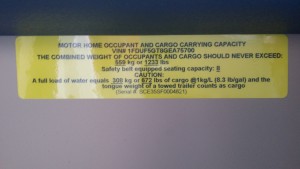
What is carry capacity and how can you find this information in an RV? There will be a data plate in the RV, either in the front, on a door, or listed inside a cabinet door. That label will tell you what the RV can carry. Depending on the class of RV we are talking about here, that figure will include the weight of occupants, fresh water in the tank, and items brought onboard the RV.
Take a look at this yellow label describing the carrying capacity of a thirty-four-foot class C diesel puller RV.
This label states that for this RV the combination of the occupants, fresh water and cargo should not exceed 1,233 pounds. That is not much carrying capacity! It would be incredibly easy to overload this vehicle to the point of being unsafe!
This would not be a good choice for a full time RVer who wants to carry all their possessions with them! Even with a cargo trailer, it would be tough! A five hundred pound tongue weight on the hitch pulling a five thousand pound GVWR trailer would knock that carrying capacity down to a little over eight hundred pounds.
Now, add two adults at three to four hundred pounds total and you barely have the carrying capacity for anything else.
Does this change in a class A diesel RV? Sure! Some can carry five thousand pounds or more! Even some of the larger class A gas RV’s have a carrying capacity of three to four thousand pounds.
The reason for going into such detail on this topic is because we know so many RVers who travel in an overloaded situation. When doing so, that puts a strain on all the mechanical components of the RV, as well as the tires that may not be designed to carry the additional weight. What can that lead to? Perhaps a tire blowout during travel. That is not something you want to experience if you can avoid it!
So, when selecting an RV that you want to purchase you can now see that there is so much more than deciding one day to buy one and then go to a dealership to look. That is the best way to get confused and probably get pushed into the wrong purchase! The same is true at RV shows! Yes, there are deals to be had, but only if you know exactly what you want after having done lots of research!
That is the best way to get confused and probably get pushed into the wrong purchase! The same is true at RV shows! Yes, there are deals to be had, but only if you know exactly what you want after having done lots of research!
Please be a smart RV buyer and do your homework! And if it is just impossible for you to know what kind of RV that will work best for you, rent one, or borrow a friend or family members, and try it out. If you have to rent an RV, and it won’t be cheap, it will be the best money you will have spent! It sure was for Pam and me!
Best of luck on your future RV purchase! When you do finally decide and buy your home on wheels, and it is a used RV, please visit our Used Purchase RV page on Facebook and share your experience with us and others! This Facebook Group has been set up to help buyers of used RV’s to find places where they can have good buying experiences.
Please leave a comment below if we can be of assistance to you in this process!
Barooooo! Guess who? It’s me Lindsey back with another new Bark Report. This time, I want to bark at you all about an icky subject, natural home remedies controlling pest insects bugs in and around your RV. (Sorry no significant others will be covered in this report.)
For me, they provide a good, quick protein snack. Catching a fly in the air is a fun game. Snap, snap, snap. Who’s faster? Another favorite of mine is rolling on the crawly kind to see if it can survive a corgi back scratch. Neither are a favorite of Mom, so I will have to give you her words of wisdom keeping our moving house pest free.
First off I got to say, if you find one of them stink bugs, by all means don’t squish it in the house. Mom grabs it with something with a paper towel and puts it outside or in a sealed jar. You can suck them up with a vacuum but be sure to dump it immediately. Warning, if you squish one, it’s a nasty smell for humans. It’s the smell that keeps on giving. Phew! I rolled on one in PA and got a long soapy bath and lots of a Perfect Coat coconut freshening spray. In my mind, the bug smelled better.
Use a spray of 2 cups water to 10 drops mint oil to keep those bugs away! Mild dish soapy water kills them. Garlic repels them. ( Not just for vampires!) Mix 2 cups water and four tsp garlic powder. The little stinkers come in through vents or small holes. I sometimes get lucky and find them when Mom brings in the slide rooms. Try rubbing your door, windows and vent screens with a strong smelling dryer sheet daily until the problem is fixed.
Next one to bark about is ants. You know those teenie, weenie, tiny little things that build mounds and make it look like the earth is moving? Well, a cool way is to sprinkle grits (yes you heard me right. The stuff all good Southerners eat for breakfast.) around all the ant mounds. They take it back to the impress their queen, eat it and POOF! Exploding ants! It expands when they eat it. The industrious ones that survive will move the colony but you just keep sprinkling, and they continue until all gone.
Sprinkle garlic between any decking or bricks to keep them off your patio. You don’t want to step on those guys cuz they get mad and bite.
Oh, I did forget to mention if you get ants inside your moving house, bay leaves help discourage them. Rabbit trail. We had someone time because the mints were left on a window ledge. The teeny tiny little buggers came right in between the slide-out room like a small army invasion with a trail right into that little tin. Mom put some whole bay leaves around the seals and ledge where they were coming in. Got rid of our tin of ant covered mints too. (Cucumber peel works too,) You can use in cabinets or tuck around slide room rubber seals. It will last about a month. They get crusty and dry when it’s time to change them.
Yo, check it out. Put a line of cayenne, or spray soapy water around entrance points. Ants won’t cross it. I guess they don’t want to be clean and don’t like spicy food. Go figure!
Okay, so all you Harry Potter fans remember Ron Weasley and his fear of spiders? Dude, he just needed a mixture of peppermint oil and water. Spray it around inside and it keeps the spiders out. Just a drop or two and some water in a small spray bottle. Spray around slides, crevices or wherever the little creepy, crawlies comes in. It makes your RV smell good too. Remember to spray where their food source is too. Outside lights attract flies; thus, Spidey shows up.
Mud Daubers, those weird looking waspy things with long legs that like to hang around all your vent areas of your RV. Prevention is best on these bad boys. Good news is they eat spiders. Remove the webs and spiders. Buh-bye. Don’t be cheap. Spend the money and get the dauber screens to put on your outside refrigerator, water heater and furnace vents. If they get in there, you can find a whole nest, and that’s not good. It can impact on your appliance operations.
Now we come to a really nasty bug, roaches. For you northerners, there are two kinds. One is called a German cockroach, and the other is called a palmetto bug. (Palmetto bug is a cockroach on steroids.) They like food and wet areas. Rule number one, clean and clean often and then clean again. Get rid of garbage daily and seal up all food. They don’t like bay leaves, garlic or cucumber slices. Put it in areas where they like to hang out, high places above refrigerator or cabinets.
The best way to keep roaches out is don’t let them in. Duh! If you have lots of pine straw around, roaches like to live in it. It’s common to see in Florida because it helps kill weeds. It’s toxic to kids and furkids, but boric acid, also known commercially as Borax laundry detergent will keep them out. You can sprinkle around your site outside, or above cabinets, slides, refrigerator inside. They’re stupid like ants and take it back to the nest to eat. Clean but dead roaches.
So a few other things roaches don’t like. Catnip. If you’re handy, make little pouches of catnip and put around your RV where you may find them. Your cat could be euphoric if it gets into these! Barooo! Sometimes I just crack me up! Or if you want to forgo that beer, soak 1 or 2 pieces of bread in a coffee can soaked in beer. They no like.
Or there is my favorite, death by dish soap. You have to be quick but spray that bugger with dish soap. Kills them dead.
You know those annoying buzzers that bite you called mosquitoes? Well, they do not like lavender or citronella. Rub some on and it will help keep them off you. A concoction that Paul Harvey says works is to buy a big blue bottle of cheap mouthwash and mix it with 3 cups Epsom Salts and three stale, cheap beer until dissolved. Spray around your site. It will last about 80 days. Mosquitoes and bugs hate it. Of course, I know a lot of humans who hate stale beer and cheap mouthwash too. Also, avoid the scented shampoos, laundry detergent, and fabric softener. Those little buzzers like scents as well as lights.
Got moths? They are a fun game to try to catch. Mom found that dried lemon peel is a natural deterrent for them. You can put some in a cheesecloth and toss or hang in your closet. Aromatic cedar oil(juniper) soaked on a cloth works too.
We need to talk flies. Boy, do they set me to buzzing by dive bombing my head and landing on me when I’m trying to catch some ZZZs. How rude! If they buzz you too, try putting crushed mint or eucalyptus oil on an absorbent cloth around the moving house. It helps deter them. We never leave my food or any people food open, but if you do, an open container of sweet basil and clover nearby will help discourage them.
Lastly, I hear you asking about mice. Hmm, I’m not a cat, but Mom did say that a couple drops of peppermint oil on a cotton ball and placed where ever mice may enter will deter them. ( Is it my imagination or is peppermint a major pest deterrent?) Food for thought for another day. One of Dad’s students even said he heard putting moth balls in your bays or engine area will keep them out.
“Get that camera out if my face! I am trying to take a nap on Mom and Dad’s bed!”
Okay, I’m done. Time to check out the inside of my eyelids. If you want to bark at me below, please do. Until next time,







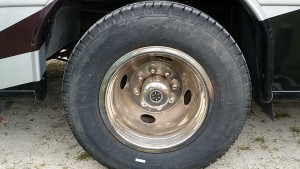
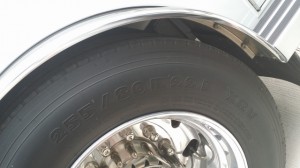

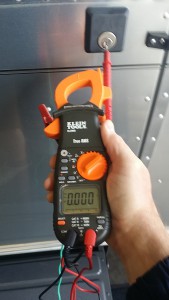 Dad tested for all kinds of things. He tested to make sure the new owners won’t get shocked when they touch the door or anything on the RV. He checked the big rubber round things that let the RV move down the road; He checked the big cloth covering thing over the door to be sure it worked, and even inside every hidey-hole on the outside.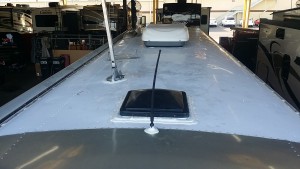











Recent Comments